U.S. Army 44-tonners in Australia
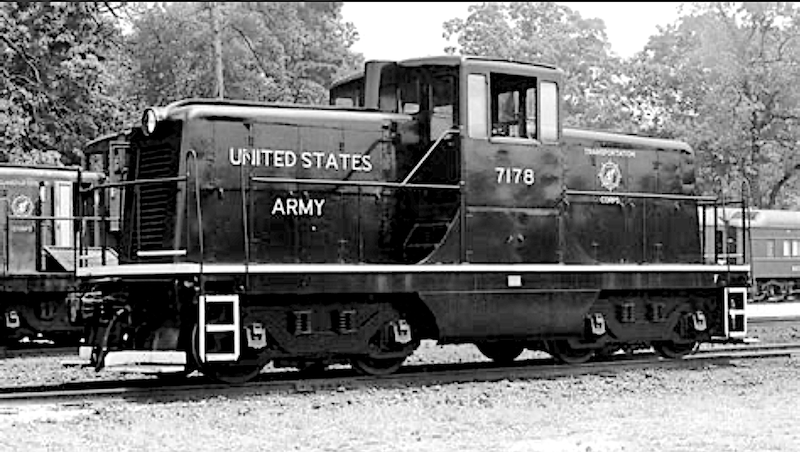
This GE 65-Ton photo depicts typical USATC livery worn by GE 44-Ton Locomotives. | |
|---|---|
During World War II, General Electric-built nearly four-hundred 44-ton industrial switchers
with the U.S. Military and Government receiving the lion's share. Twenty of the small
versatile center-cabs were assigned to U.S. Army and Navy ordnance and munition plants spread
throughout the continental 48 states. Typically, these critical war materiel plants were multi-building
complexes located on large sites with extensive railroad networks. Of course, GE was not the
only locomotive company to build industrial switchers to work the military's large number of
ordnance and munitions producing facilities. If a company could provide a locomotive powered
by a reliable internal combustion engine their name probably appeared on the list of military
locomotive builders.
However, this discussion centers solely on four 44-tonners plucked from the GE assembly line near the end of 1943 and shipped to the Australia's Department of Munitions plant on the western outskirts of Sydney. Initially, The four-axle GEs were a component of America's Lend-Lease Plan which was designed to aid ally countries between 1941 and 1946; the GE quartet were purchased outright by the Australian Government after the war. The four standard configured 380-hp "critters" were initially produced for the U.S. Army Transportation Corps as #7920-7923, but the four-some were detoured to Australia where they received conventional buffers and chain coupling. The units also underwent minor modifications to shed weight in order to meet that country's lower rail loading capacity. Primarily external in scope, the revisions included a cut-down cab and down-sized pilots. With the Japanese surrender in August 1945, the standard gauge GEs became the property of a government railroad agency and placed in various types of service, including the major maintenance shops at Eveleigh. While 7921 and 7922 were working the Commonwealth Government's Woomera long-range weapons test site in 1948, sisters 7920 and 7923 were sold to the New South Wales Government Railway (NSWGR). New ownership was also in-store for 7921 and 7922; the pair were transferred in 1950 to the Commonwealth Railway and became DE90 and DE91 respectively. That lasted until July 1975, when the DE 90 and 91 were absorbed by the Australian National Railroad. The 1970s also witnessed the sale of 7920 and 7923 by NSWGR to the British Phosphate Commission; the duo worked the commission's Christmas Island facilities. At the close of the decade, the pair were rebuilt by FR Tulk of Perth and received a new Caterpillar engine, along with low-profile hoods. The two GEs were also converted to 2-foot gauge consistent with mining operations on Christmas Island. BPC shuttered its business in 1987. Although the final disposition of its 44-tonners is uncertain; a derelict #9402 was photographed as late as 2018. As for the two Commonwealth shunters, they were retired in the early 1980s, with the 7921/DE90 preserved at the NSW Rail Museum in Thirlmere. Similarly, sister 7922/DE91 went to the National Railway Museum in Port Adelaide. (Our thanks to Nathan Woo whose research and photos made this profile possible) --- R. Craig |
|
| Photo Gallery | |
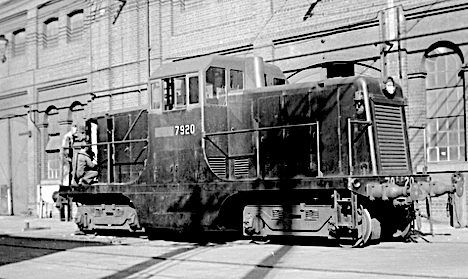 7920 >> NSWGR 9401: While on the government railroad, the #7920 wore a light grey over black livery. Photo was taken outside the Eveleigh Locomotive Shop; the loco later went to NSWGR. (N.L Chin photo, courtesy of Sydney Tramway Museum) |
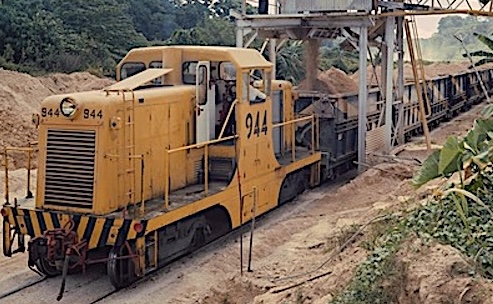 NSWGR 7920 >> BPC 9401: This photo of a standard gauge (1435mm) 44-toner appears to be that of British Phosphate Commission #9401 prior to any rebuilding -- but its uncommon #944 number requires further research. (Jeff Brown photophoto / Nathan Woo collection) |
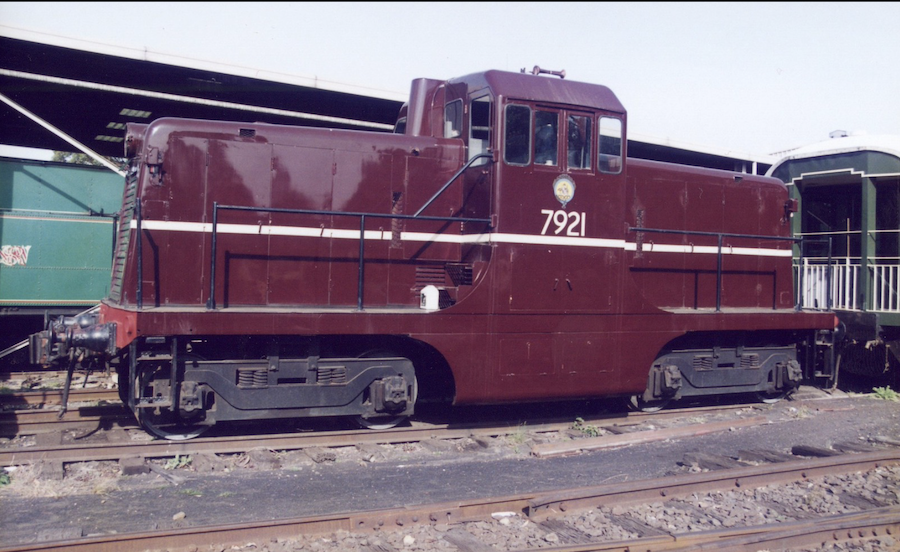 7921 >> CR DE90: GE 44-Ton #7921 was one of two such locomotives assigned to Australia's Long Range Weapons Test site at Woomera. After shedding its government dungarees, the 44-ton went to work at a Commonwealth Rwy coach yard in Sydney. (Photo by Nathan Woo) 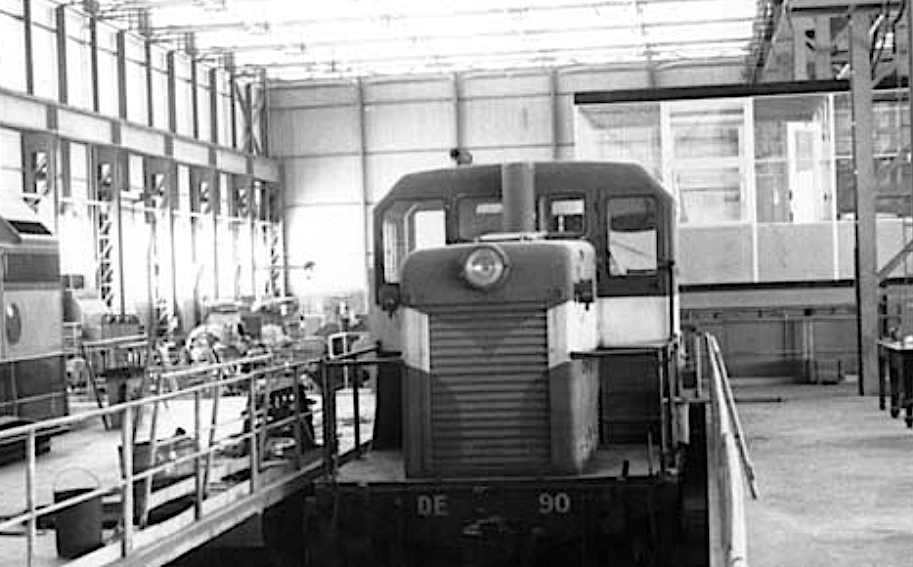 CR DE90 >> ANR DE90: This photo was taken inside the Port Augusta maintenance center as Australian National's DE90 waits to undergo running repairs. Once its service career was completed, the GE became an exhibit at the National Railway Museum in Thirlemere. (Nathan Woo collection) | |
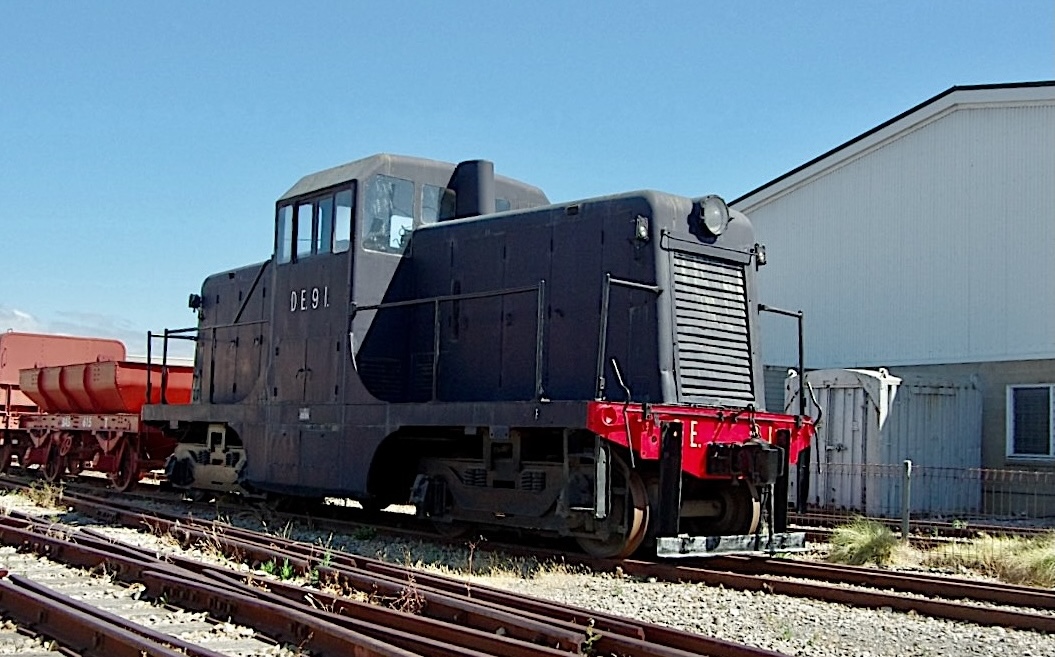 7922 >> CR DE91: Work is underway at the National Railway Museum in Port Adelaide to cosmetically restore this 44-tonner to its as-delivered #7922 appearance. The locomotive had also served at Australia's Long Range Weapons Test site at Woomera; it later went to the Commonwealth Railway as DE91. (Nathan Woo photo) |
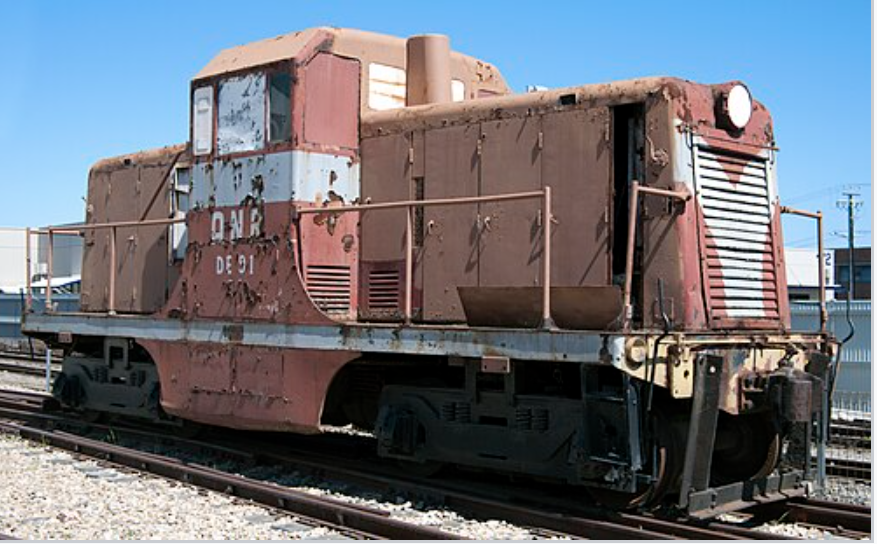 CR DE91 >> ANR DE91: DE91's tenure on the Commonwealth Rwy ended in 1979 after a 25-year stint. This Marcus Wong photo depicts the unit wearing standard attire of once new owner Australian National prior to start of restoration work by National Railway Museum volunteers in Port Adelaide. |
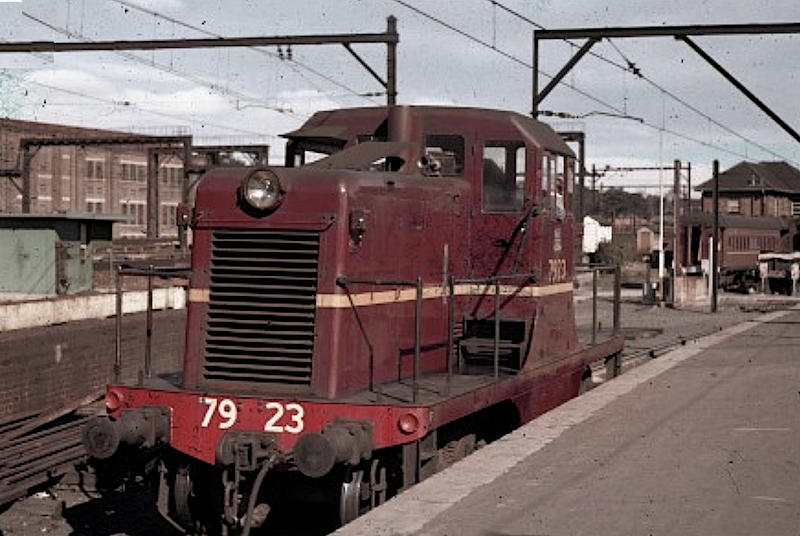 7923 >> NSWGR 7923:< /font> The government purchased #7923, a standard GE 44-Ton, for $37,500 in 1943. This photo shows it wearing regular NSWGR attire in later years at Sydney's Central Station. (Photo by Commissioner Geoff) |
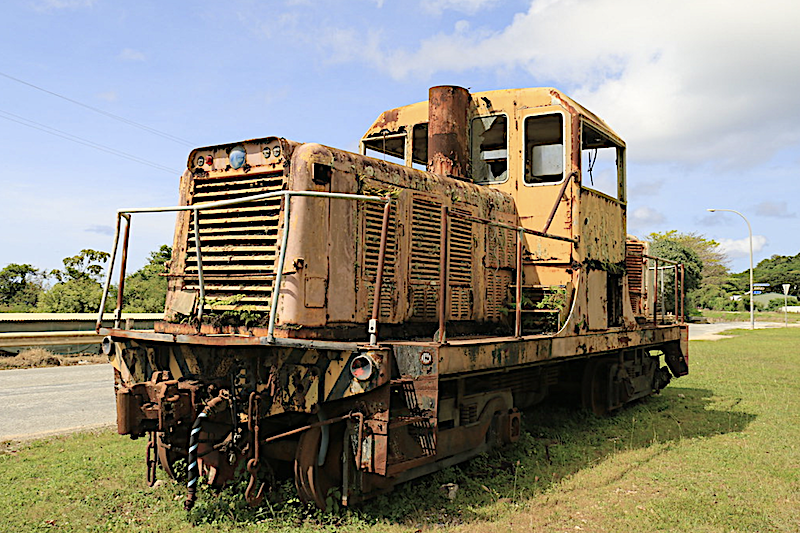 NSWGR 7923 >> BPC 9402: Appearing derelict in this 2015 photo, British Phosphate Commission #9402 had previously received a new Cat engine and low-profile hood, along with stairway-type steps . (Photo by Jungle Jim at Drumsite, Christmas Island) |
USATC 7920-7923
| ||||||
|---|---|---|---|---|---|---|
| Austalia Govt. Dept of Munitions # | To NSWGR (in Sept. 1948) as # | To Commonwealth Rwy (in 1950) as # | To Australian Nat'l (in 1975) as # | Serial No. | Bldr Date | Notes |
| 7920 | 7920 | -- | -- | 17938 | 8/9/1943 | Sold to British Phosphate Commission as 9401; rebuilt in 1979 by F.R. Tulk |
| 7921 | -- | DE 90 | DE 90 | 17939 | 8/9/1943 | Served at Australia's Long Range Weapons Test site at Woomera; then went to Commonwealth Rwy followed by Australian National. Currently exhibited at NSW Rail Transport Museum at Thirlmere. |
| 7922 | -- | DE91 | DE91 | 17933 | 8/27/1943 | Served at Australia's Long Range Weapons Test site at Woomera; then went to Commonwealth Rwy followed by Australian National. Currently exhibited at National Railway Museum at Port Adelaide. |
| 7923 | 7923 | -- | -- | 17934 | 8/27/1943 | Sold to British Phosphate Commission as 9402; rebuilt in 1979 by F.R. Tulk |
Abbreviations:
| ||||||
* * * Credits * * *
|
Sources:
Upload: 25 March 2026 (by R. Craig) |
|