Spokane Portland & SeattlePacific Northwest's Own Railroad |
|||||||||
|---|---|---|---|---|---|---|---|---|---|
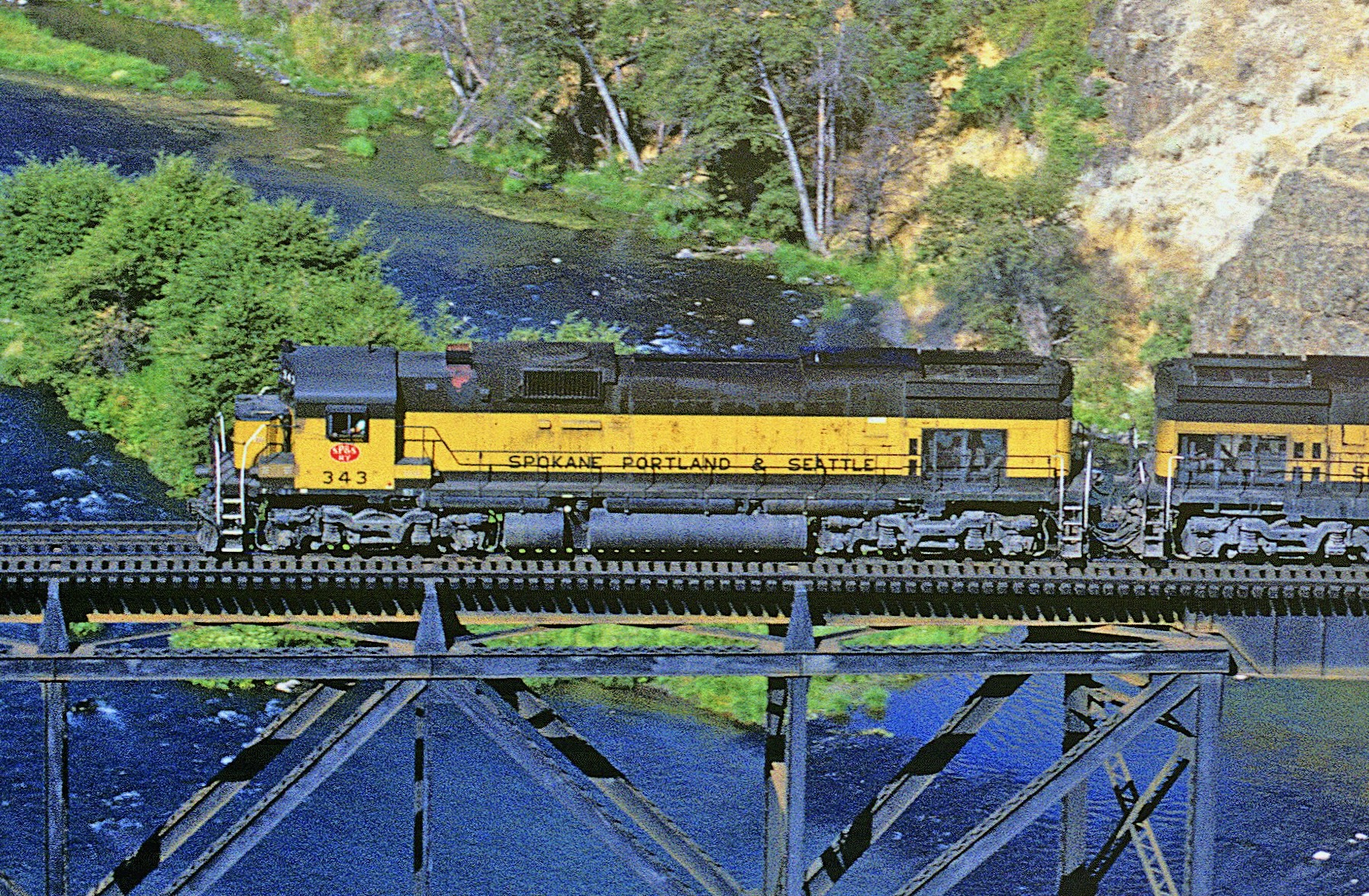
(Keith Ardinger photo) | |||||||||
Chartered in 1905 by parents Great Northern and Northern
Pacific, there was always something special about the sight of SP&S freight trains grinding
their way up the slopes of the Oregon Trunk Line (above photo) or high-stepping along the
shore of the Columbia River in Washington state with a 100-car manifest in tow. |
|||||||||
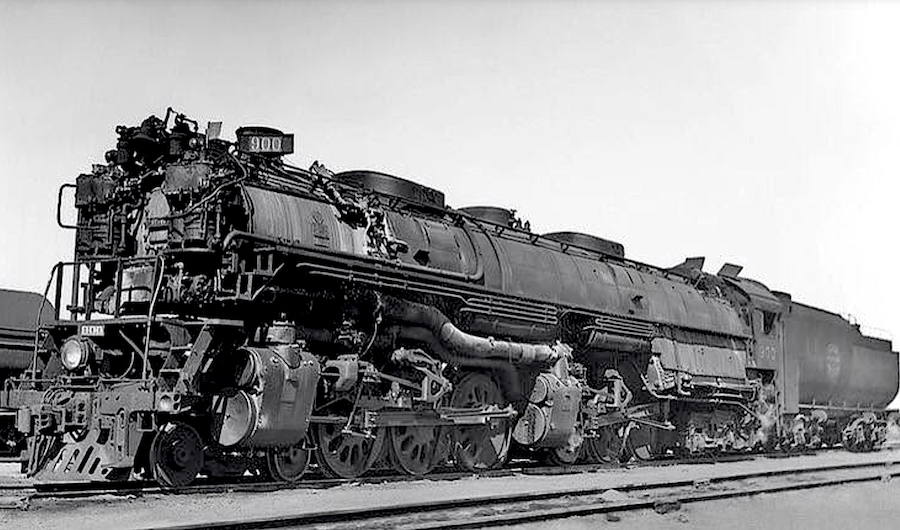
Moreover the 950-mile railroad had a long relationship with Alco which dated back to the 1907
and culminated during the steam era with the purchase of six Z-6 and two Z-8 class 4-6-6-4
"Challenger" series. Built at Schenectady and delivered in 1937 and 1944 respectively, the
articulated "900" series Alcos gained popularity in the manner in which they routinely conquered
the rugged terrain and profile presented by the Oregon Trunk. The oil-burning challengers were scrapped in 1960. (Photo right by Juice Junkie / Gerald Nielsen collection) |
 | ||||||||
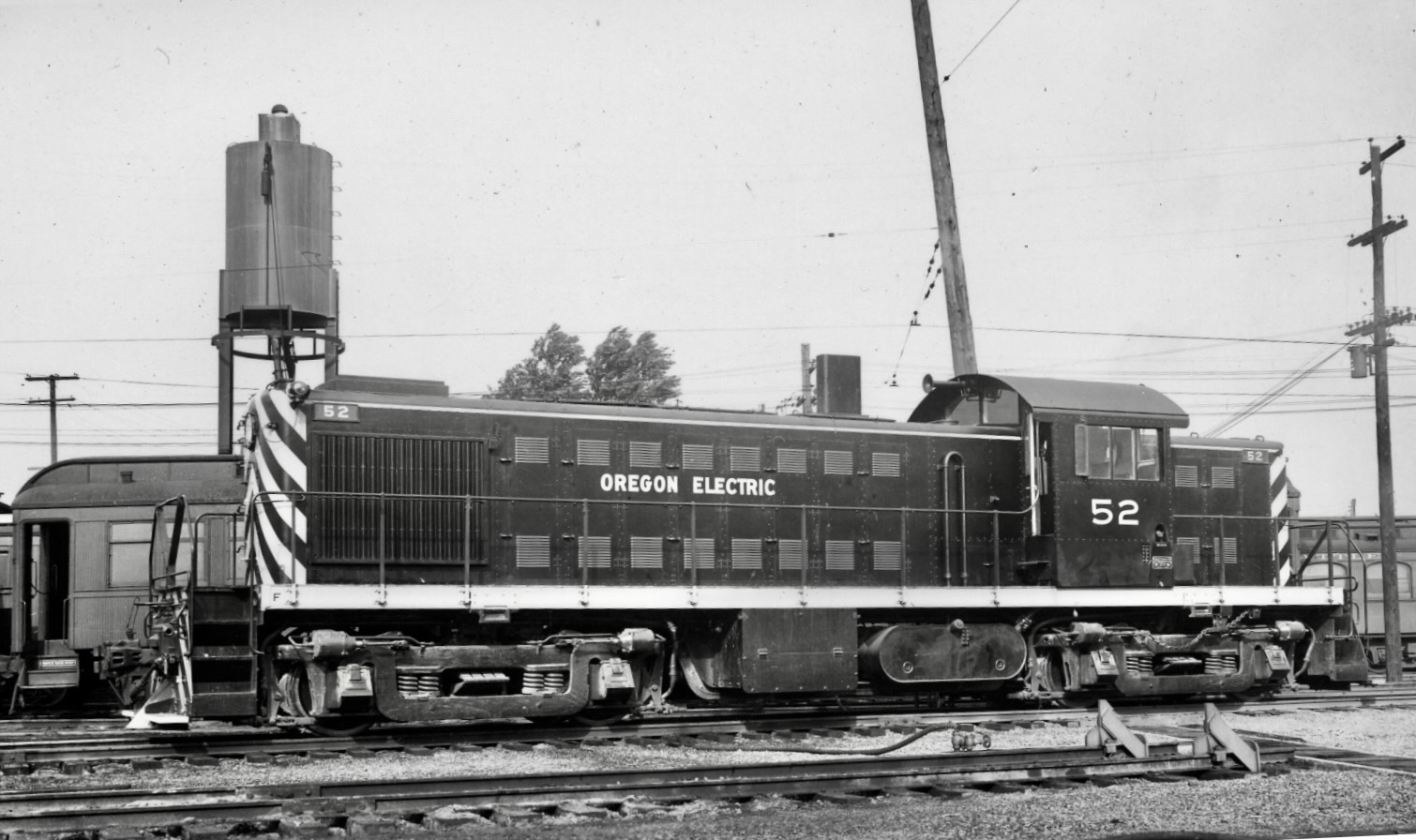
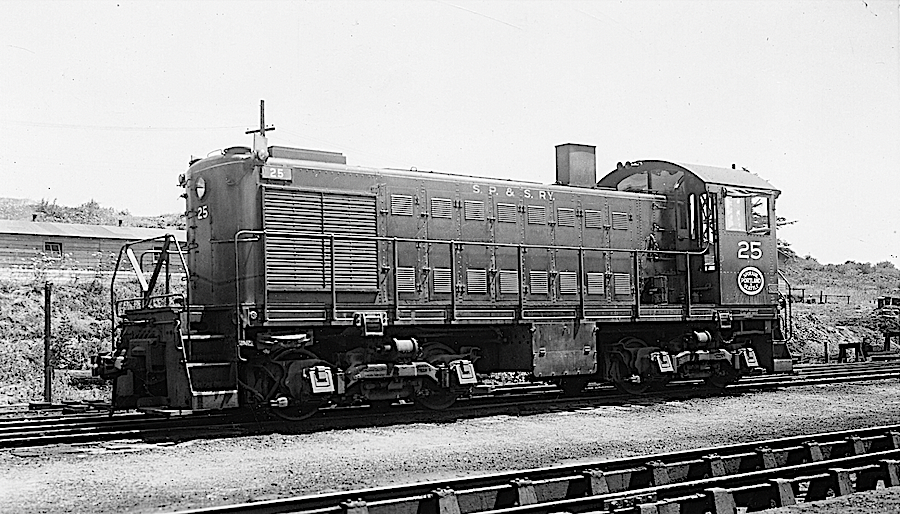
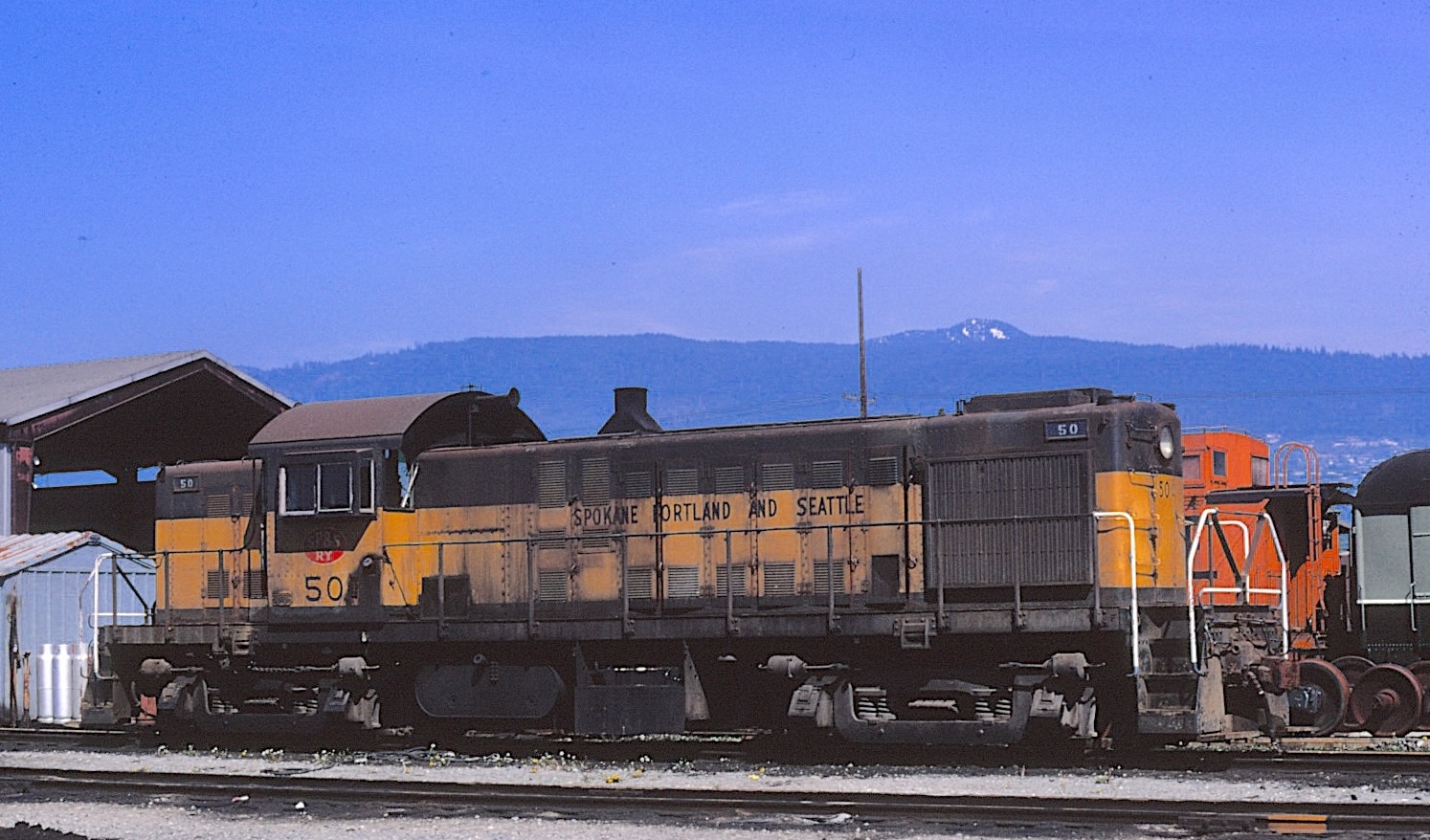
The first diesel-electric road units to carry the SP&S banner were six Alco 1000-hp RS1s (#50-55)
that arrived in May-July 1945. Four of the road-switchers (#52-55) were assigned to and lettered for
the 123-mile subsidiary Oregon Electric which had originally been an interurban line. As the
railroad's aging steamers were sidelined during post World War II years, SP&S purchased a large
number of first generation FA1s, RS2s, RS3s, and a lone pair of FA2s to fill the void. (Photo right by Deane Motis) |
 |
||||||||
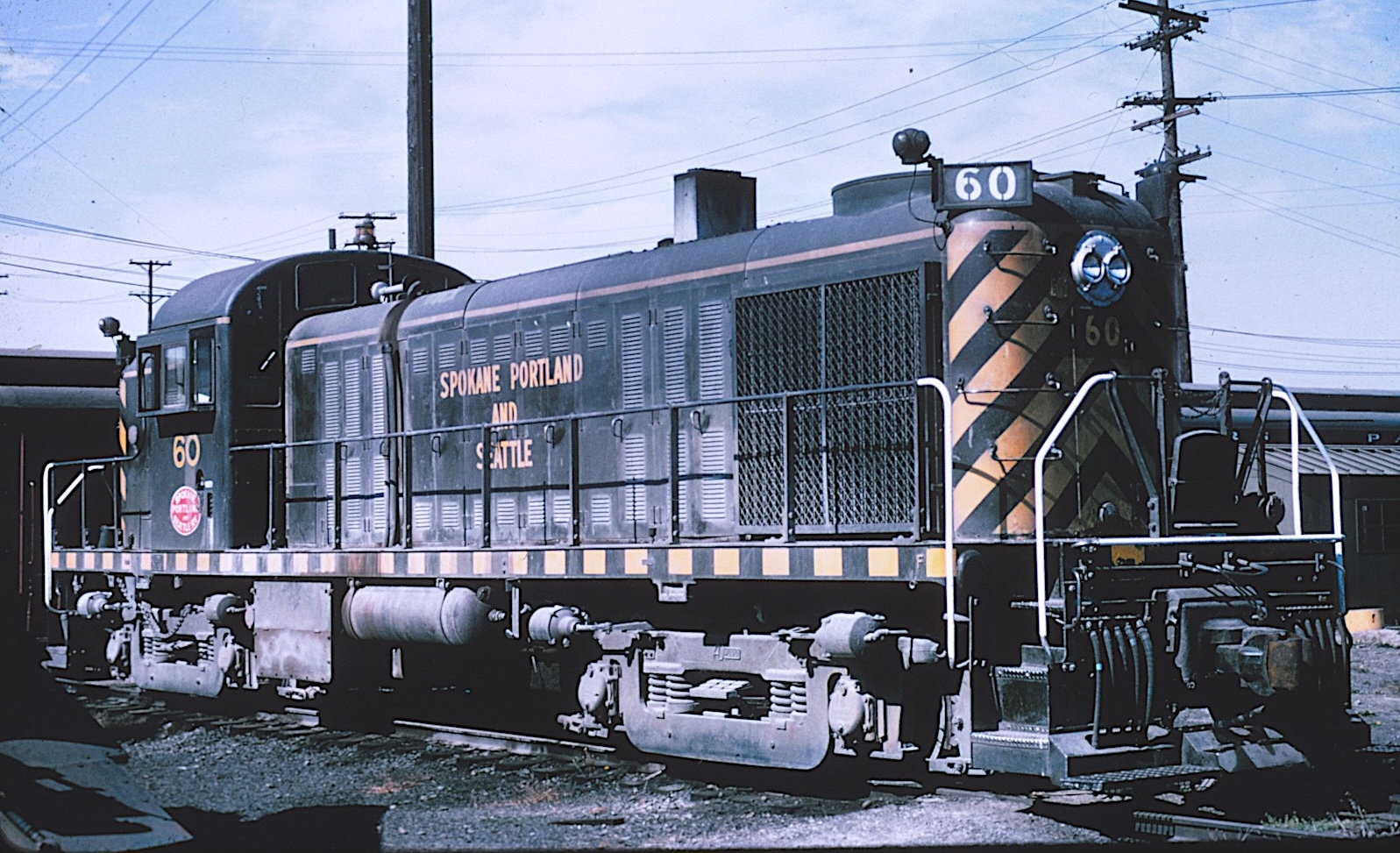
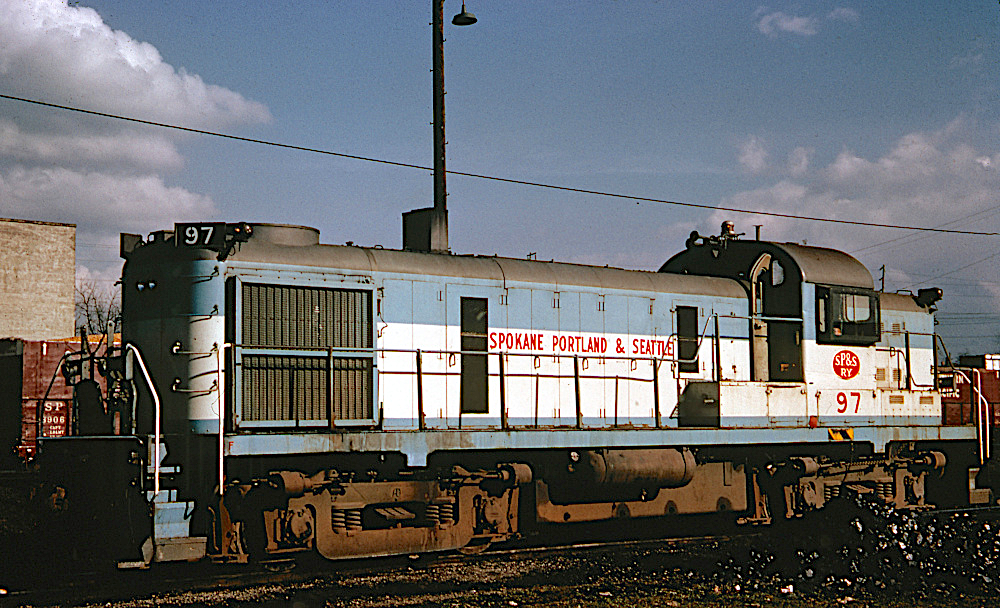
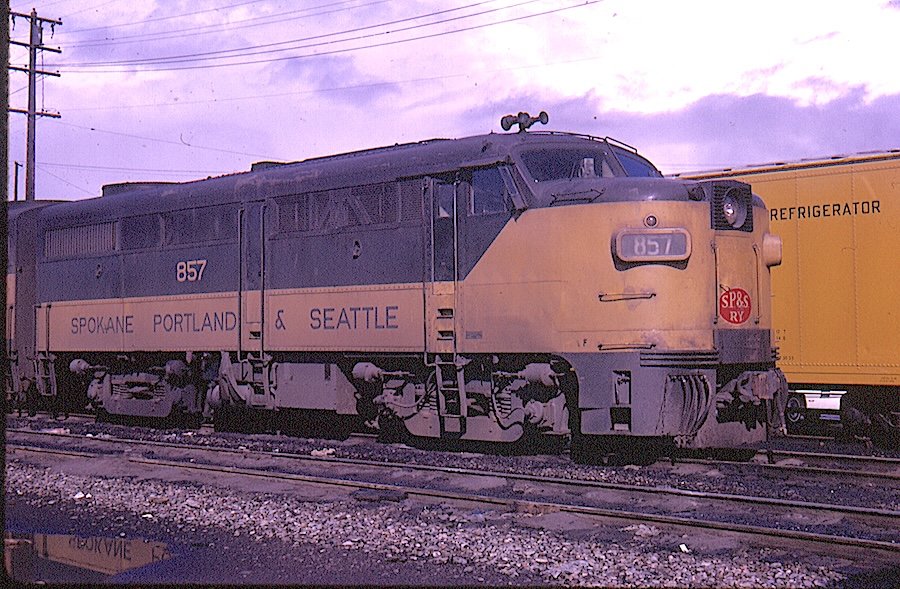
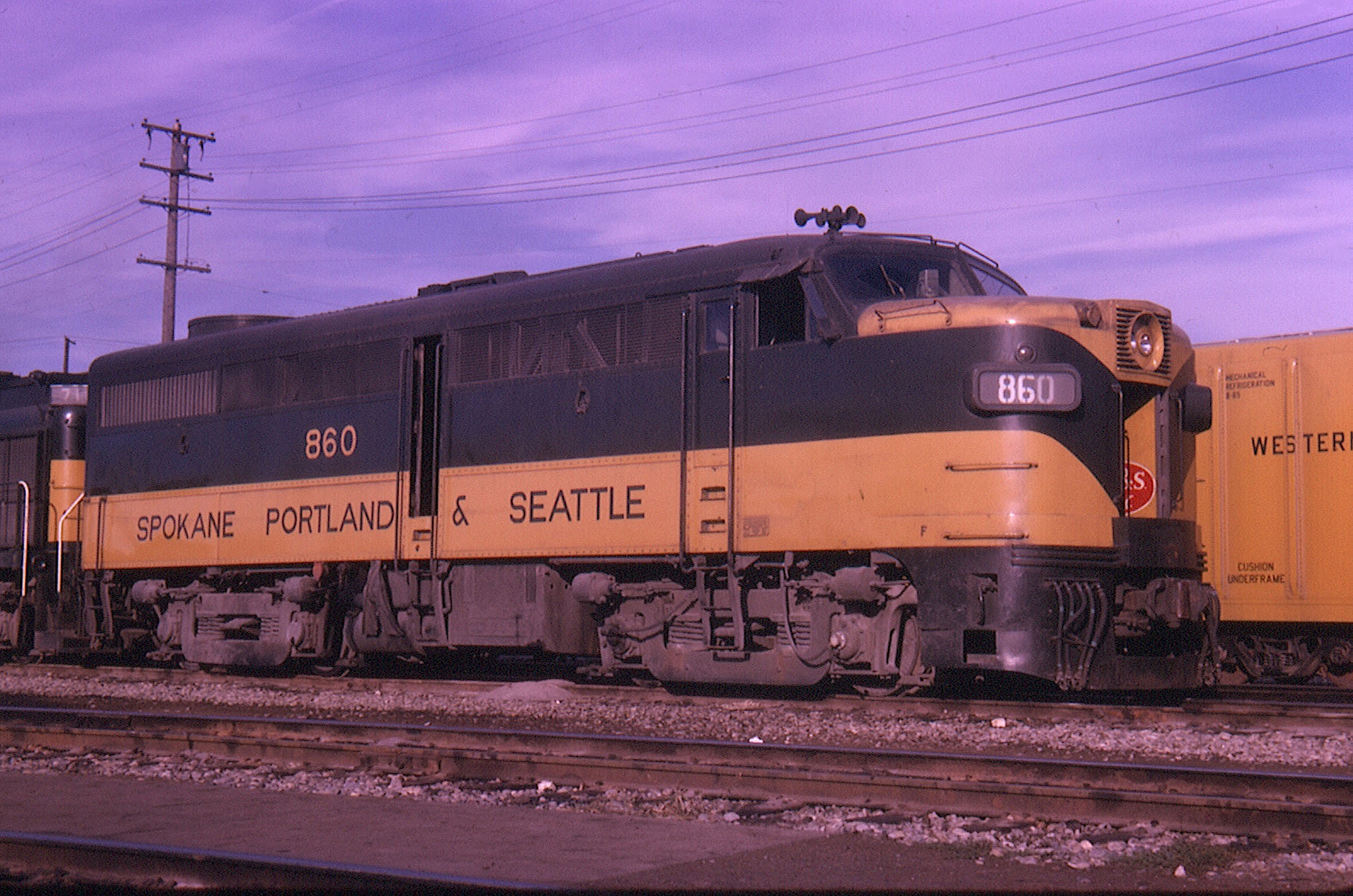
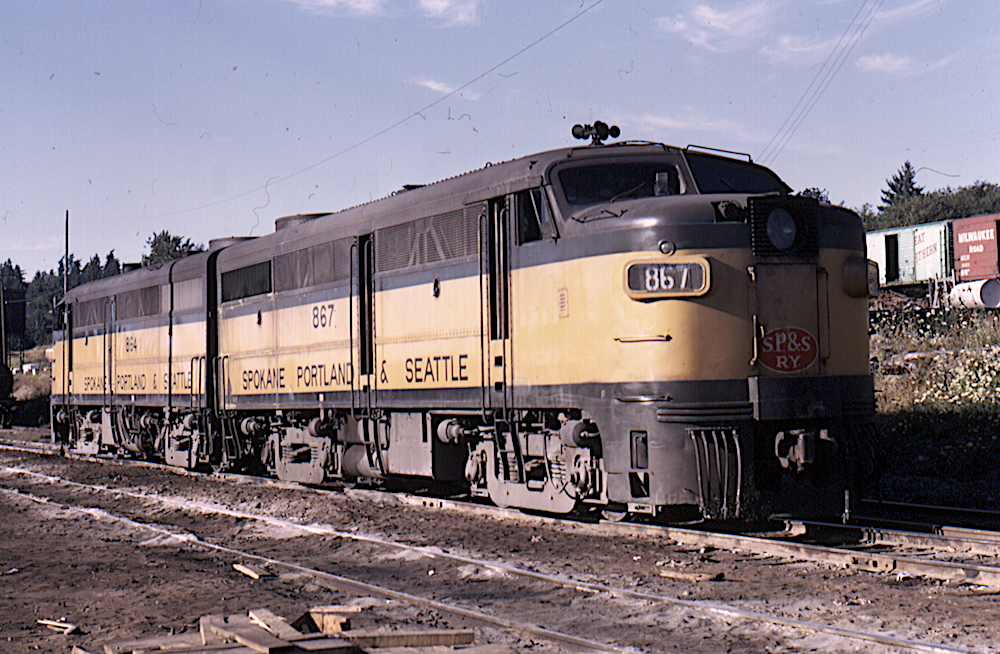
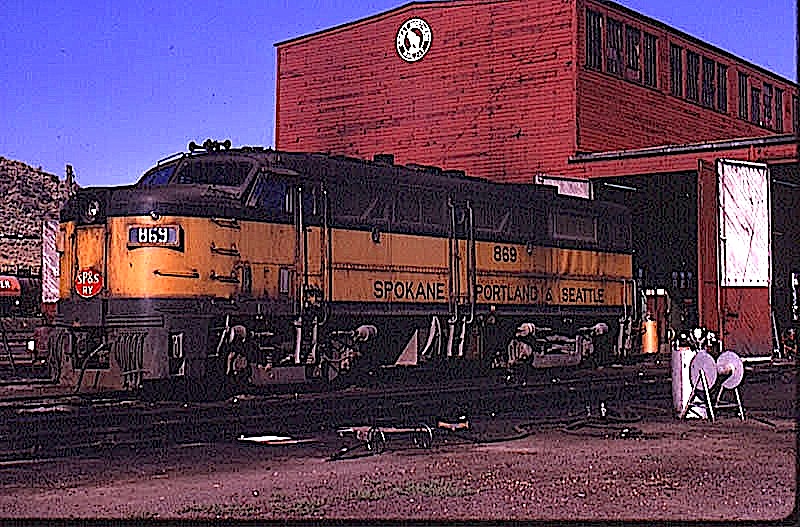
During the years leading up to SP&S's acquisition of Alco's new "Century Series" locomotives,
it was getting progressively more difficult to determine which of the railroad's many paint
schemes was the corporate standard. Railroad managers wer not adverse to experimenting
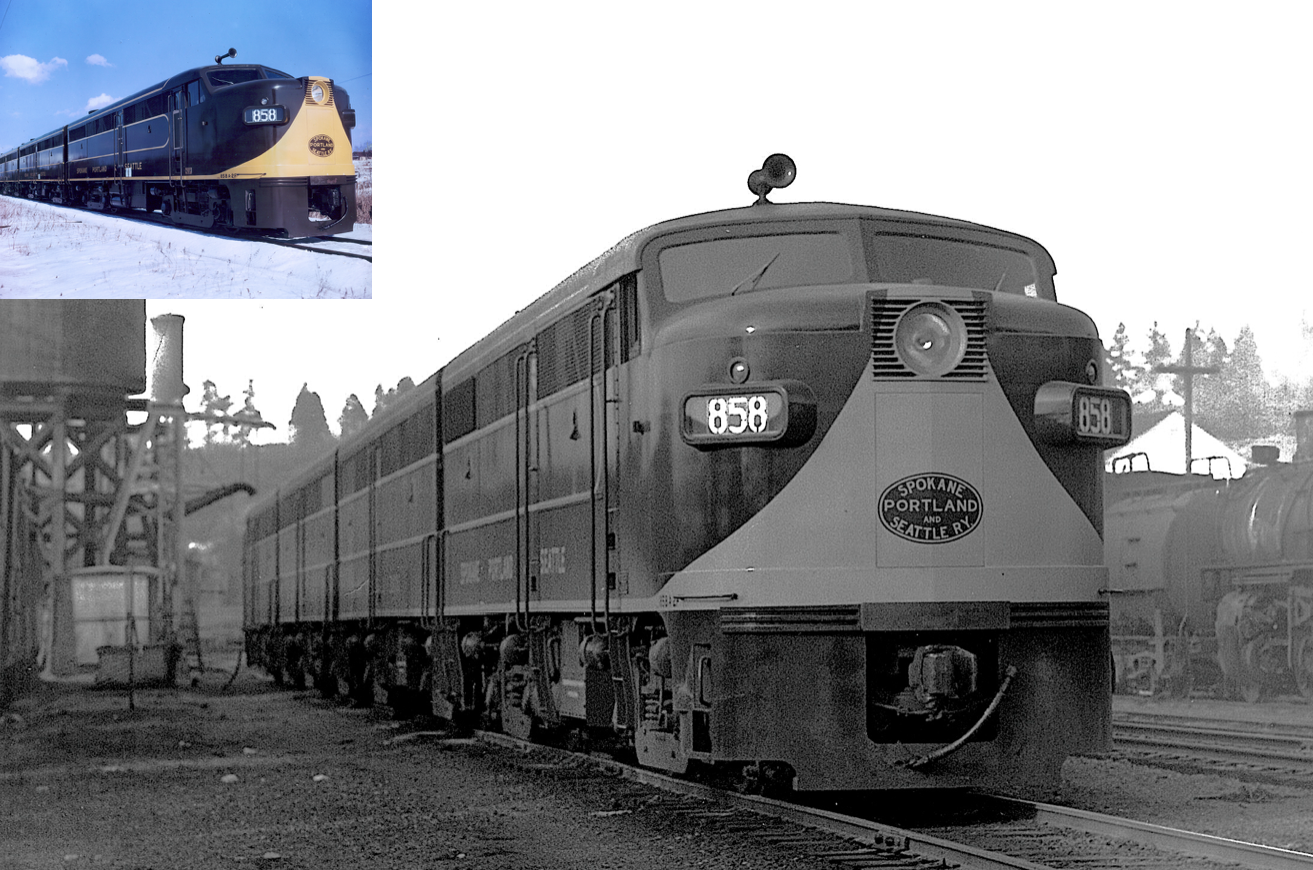
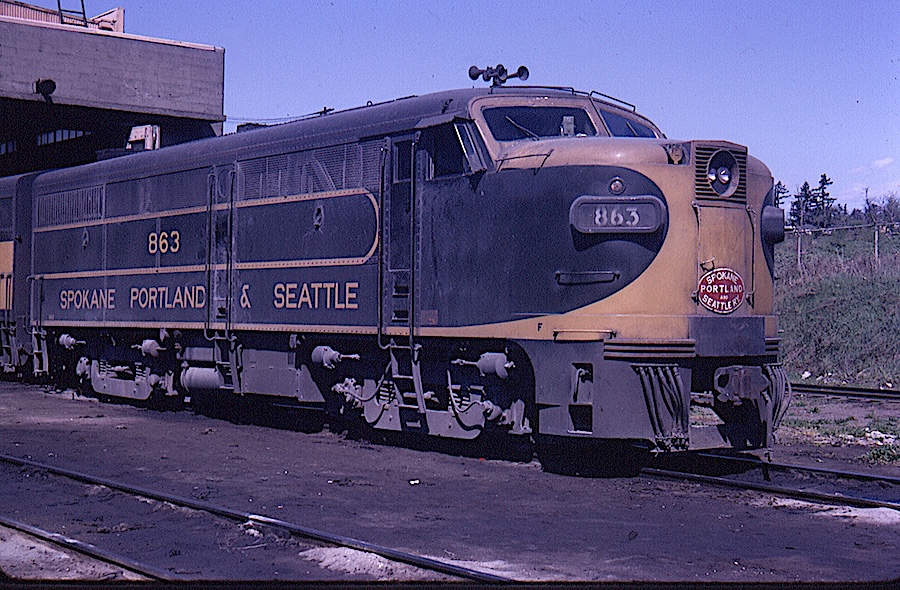
with locomotive paint schemes. The railroad's substantial fleet of streamlined freight cabs
is perhaps a good illustration. The Alco FA roster which consisted of 18 FA1s, 2 FA2s, along with
10 FB1s and 2 FB2s represented five different paint schemes.
It's no secret that many railroad owners found the V12-244 prime mover that drove Alco freight units to be unreliable and persnickety; that was not necessarily the case on the northwestern Pacific railroad. The SP&S mechanical department personnel were highly skilled, familiar with the equipment's nuances, and knew how to keep the Alco units road worthy. Additionally, the loco manufactuer had built a regional parts distribution center in Seattle which facilitated the acquisition of parts and furthered the expeditious return of power to service. |
|||||||||
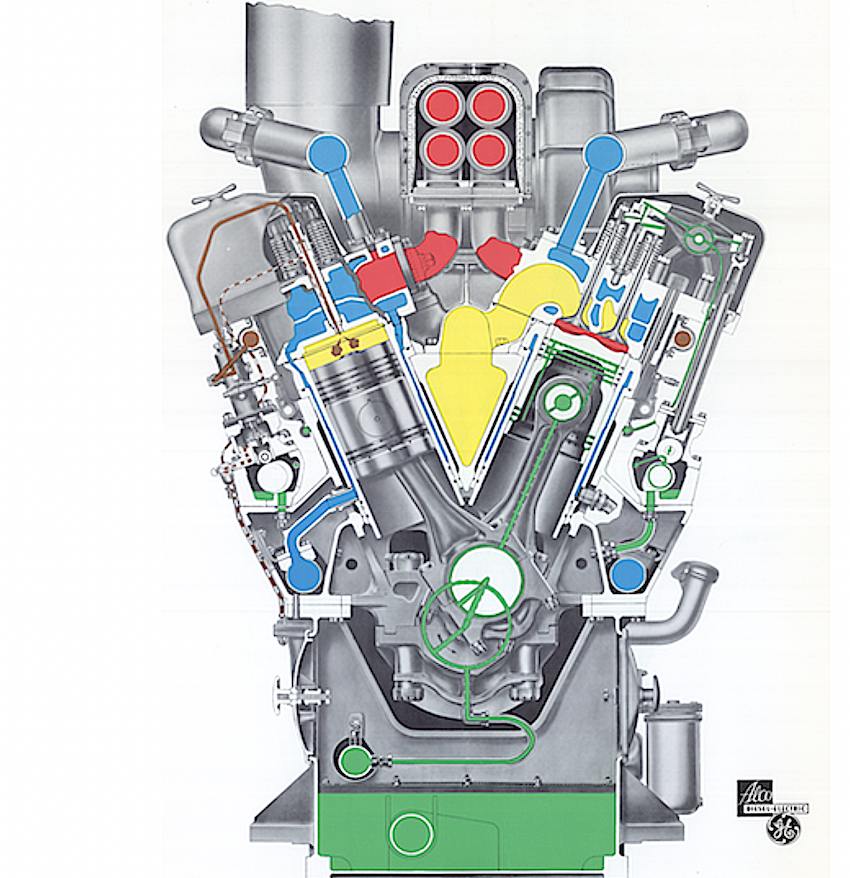
The much maligned 244 engine had undergone many significant improvements by 1954 that
substantially improved performance and dependability, according to some accounts. The most notable
of the changes were: Replacement of the air-cooled turbo-charger with a water-cooled unit,
Ni-Resist rings, castings and piston inserts, new main bearings and connecting rods, hardened
crankshaft, and high-pressure fuel lne and snubber valves that reduced erosion and enhanced fuel
performance. The upgraded power plant was sometimes referred to as the V12-250. (Drawing at right)
|
 | ||||||||
During the latter part of the 1960s, the railroad sold several of the early Alco road units back
to the builder as trade-ins on more powerful second generation 2400, 2500 and 3600 hp Centuries.
The first of the newcomers arrived in 1964 and were quickly cycled into the train service. Thus,
it became a common occurence to see one or more of the 244-powered road units in a mixed
consist with brand new four and six-axle freight haulers.
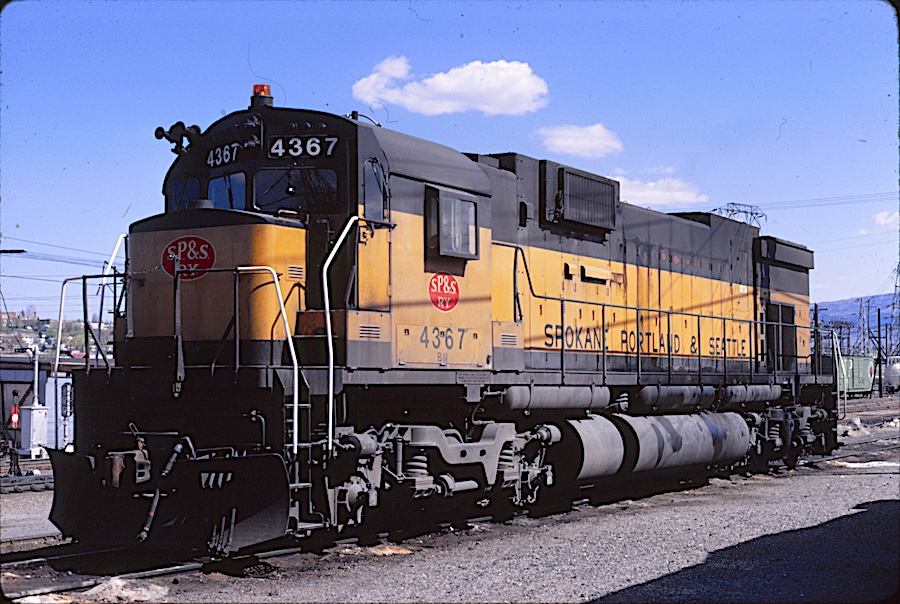
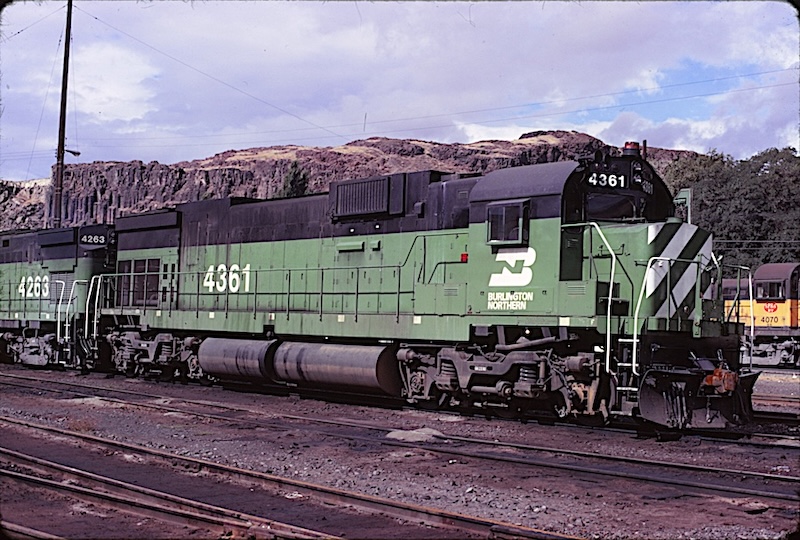
On 2 March 1970, SP&S faded into history along with parents, GN, NP and the midwest's Chicago Burlington & Quincy. In their place was the newly formed 24,000-mile Burlington Northern which served 17 states. Although two-thirds of the SP&S roster had either been scrapped or sold prior to the merger date, some first generation FAs and RSs continued to toil. The only changes were the addition of a small "BN" beneath the cab window and a four-digit road number. In fact, that was true for most units, but gradually century-types were given a fresh coat of cascade green paint. The photo below of BN #4367 at Wenatachee, WA in April 1971 was from the camera of Doug Cummings; the BN #4361 photo was taken by Joe Brockmeyer at Wishram, WA in September, 1973. |
|||||||||
 |  | ||||||||
Many track-side observers expected the SPS&S twenty-year old Schenectady-built products to be
early casualties of the BN merger. However, their departure from the roster was slower than
anticipated; in fact, the end did not come for another two full years for some first generation
units. In August of 1971, BN FA1 #4116 along with a RS3 companion hustled tonnage through Stevneson
with a train from Pasco to North Vancouver, Washington. Interestingly this same Alco cab unit
was the last FA of any type to haul a regularly scheduled freight train in North America. (J.
David Ingles photo) |
| ||||||||
Alco-Built | |||||||||
 |
 |
||||||||
 |
 |
||||||||
  | |||||||||
  | |||||||||
  | |||||||||
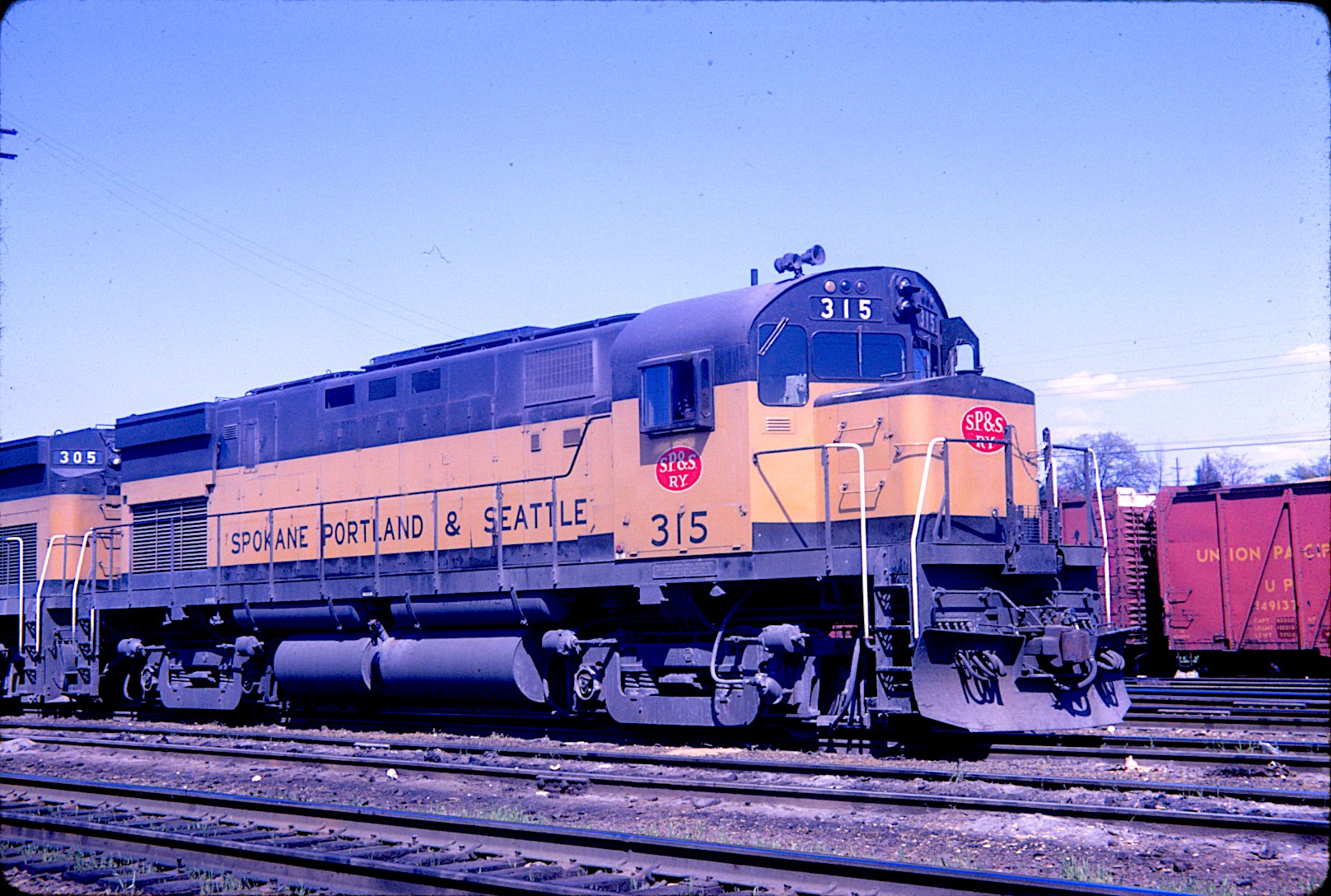
SP&S was the only class one or regional railroad west of the Mississippi River to purchase
four-axle, high horsepower centuries direct from the builder; the pacific-northwest freight
carrier employed both 2400-hp and 2500-hp models. First of the C424s (#300-306) arrived in
1964; pleased with the newcomers performance the railroad placed follow-up orders for sixteen
C425s (310-317 and 320-327). On 10 April 1966, C425 #315 was photographed at the railroad's
Vancouver Yard. (Jack Pfeifer photo at right, *) |
 |
||||||||
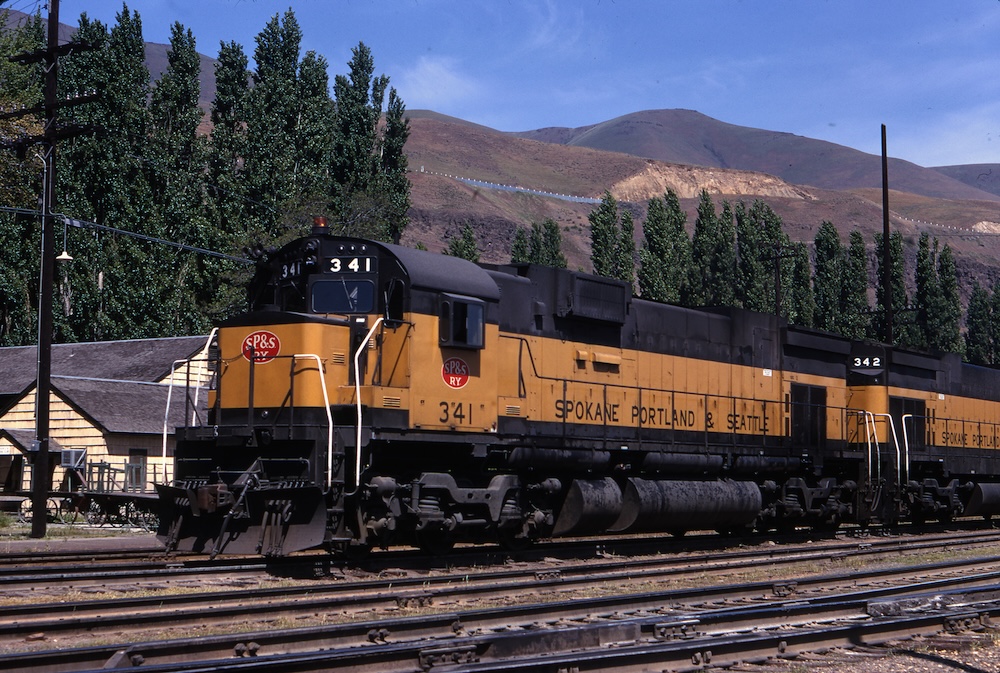 |
Beyond a heavy concentration of Alco locomotive power, SP&S was noteworthy for its fleet of
ten C636s. The first group (#330-336) were built during December 1967, the remaining four units
(#340-343) were assembled in November the following year. Only two other domestic railroads
-- Illinois Central and Penn Central-- had purchased the six-axle brutes. With retirement in
1980, BN 4366 (ex-SP&S 340) and BN 4369 (ex-SP&S 343) were sold to Austalia's iron-ore hauling
Robe River Railway. An unknown photographer caught a relatively new #341 and 342 at Wishram,
WA during May 1969. (Photo at left from the Deane Motis collection) |
||||||||
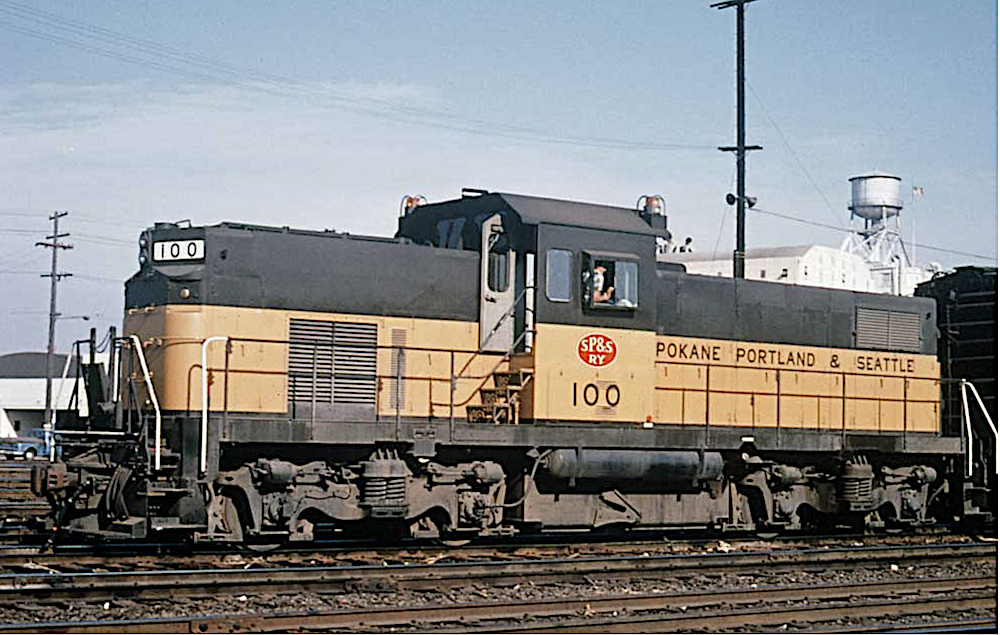
By 1968, the pacific northwestern railroad's fleet of six EMD-built switchers were already
twenty-years old, and as business grew, the practice of building longer and heavier trains
became more of a task for the 1000-hp units. Help arrived late that same year from Schenectady
in the shape of two off-center-cab C415s #100 and 101. Although the pair of 1500-hp centuries
were initially assigned to the Oregon Electric sub-divsion, they later could be found elsewhere
on the system. (Photo right -- Jeff Moore collection / courtesy of Deane Motis.) |
 |
||||||||
Baldwin-Built | |||||||||
Although locomotives that carried an Alco builder plate have received all of the attention
up to this point in the discussion, Spokane Portland & Seattles's first diesels were NOT Alcos.
Instead they came from the large manufacturing plant in Eddystone, Pennsylvania and bore a
Baldwin Locomotive Works builder plate. |
|||||||||
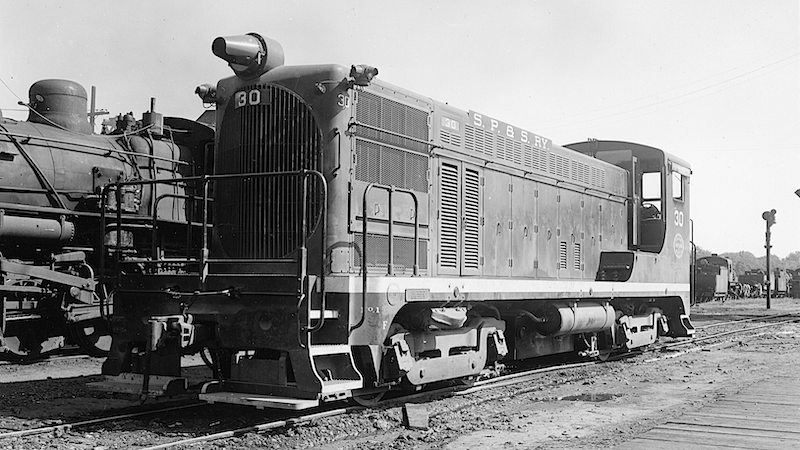
The distinction of being SP&S"s first diesel-powered locomotives went to a pair of early
VO-1000s #30 and 31. Built in February 1940, the pair had functioned as Baldwin Demonstrators
#307 and 322 for several months prior to their arrival on SP&S rails in October 1940. They
were joined by three additional VO-1000s switchers #32-34 during 1942 and 1945. Note the
unusual headlight arrangement on #30. (Photo right -- Deane Motis collection)
 |
|||||||||
EMD-Built | |||||||||
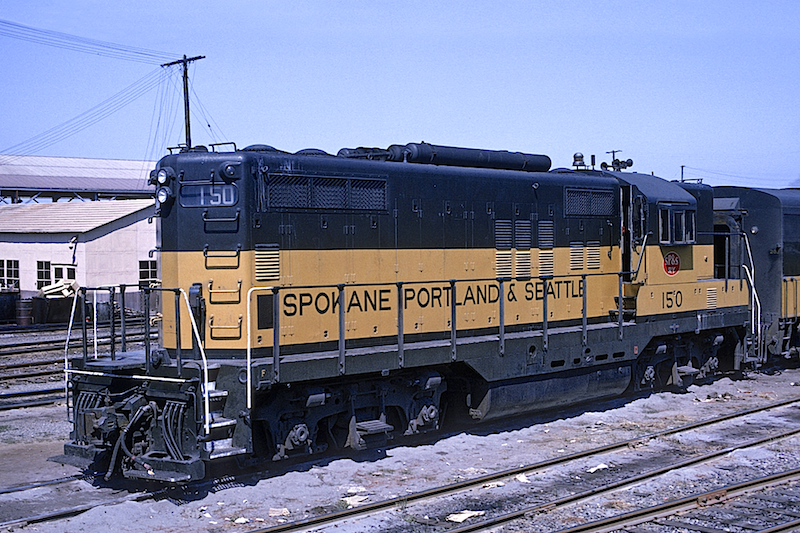
The EMD component of the SP&S roster was comprised of twenty units. All of them were built during
a ten-year span that began in 1947 and witnessed the delivery of three F-units, ten geeps, 6 yard
switchers and a single passenger E-unit. One of the contributing factors to the railroad's preference
for Alco-built locomotives was a huge post-WWII backlog at EMD; consequently the LaGrange builder
was unable to expedite new orders. Thus it was Alco by default.
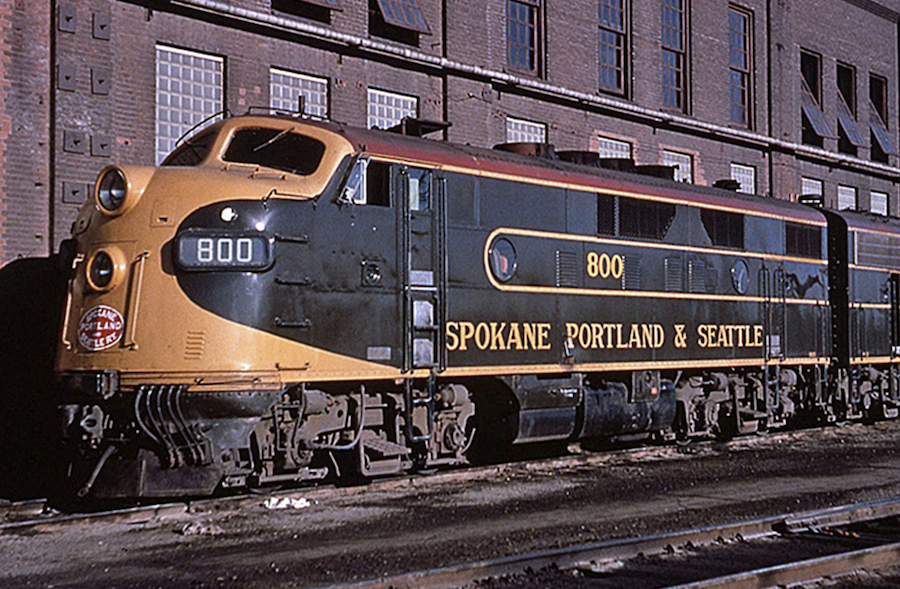
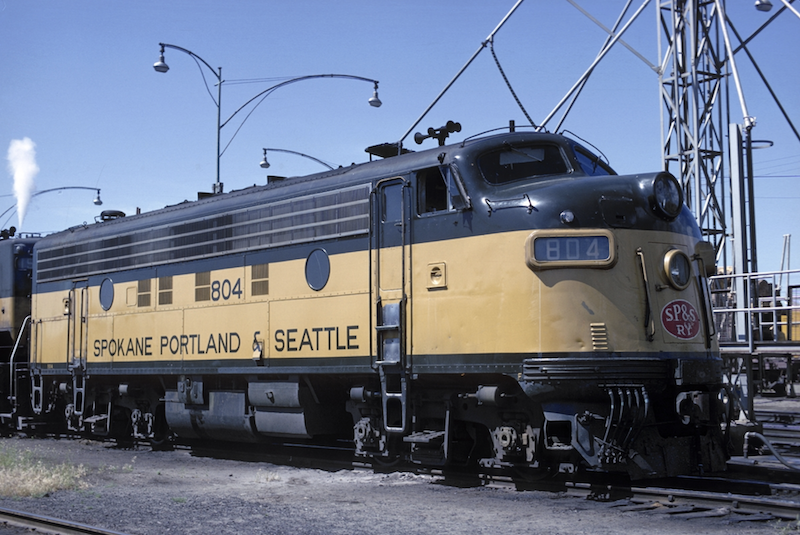
The first EMDs on the property were two 1500-hp F3As. Numbered 800 and 801, the duo served primarily as protection power for SP&S's section of the eastbound "Empire Builder" and and westbound counterpart "Western Star" passenger trains between Portland, Oregon and Spokane, Washington. A third F3A (#802) followed in 1949, and four F7As (#803-806) in 1951. |
|||||||||
 |
 |
||||||||
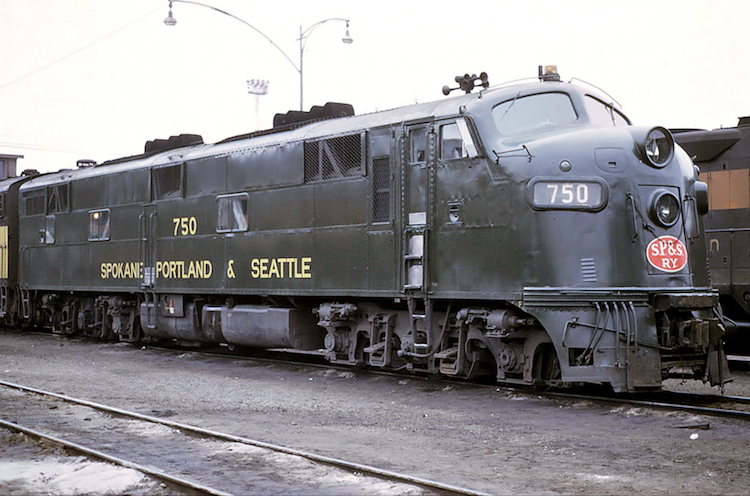 When delivered in 1949, E7A #750 wore the colors of Great Northern's Empire Builder
passenger train, but lettered for SP&S. During 1969, the six-axle passenger hauler was redone
in a dip pullman green scheme. (Doug Wingfield photo at Spokane, WA in early spring of 1969) |
 |
||||||||
This review of Spokane Portland & Seattle diesel locomotives concludes with a brief look at the
six EMD switchers that helped comprise the railroad's roster. Delivered in two groups of three,
the 1000-horsepower units performed all types of yard, terminal and on-line industrial duties,
Occasionally they also lent their muscle to heavy drag movements.
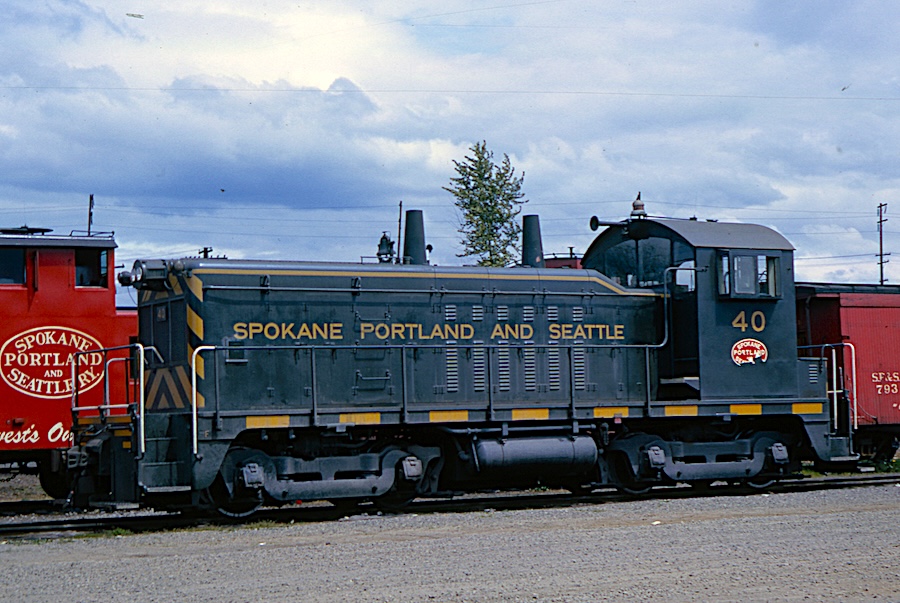 In 1948, three NW2s #40-42 were placed in service; the photographer caught the #40 working Hoyt
Yard at Portland in 1962. (Vince Porreca collection) 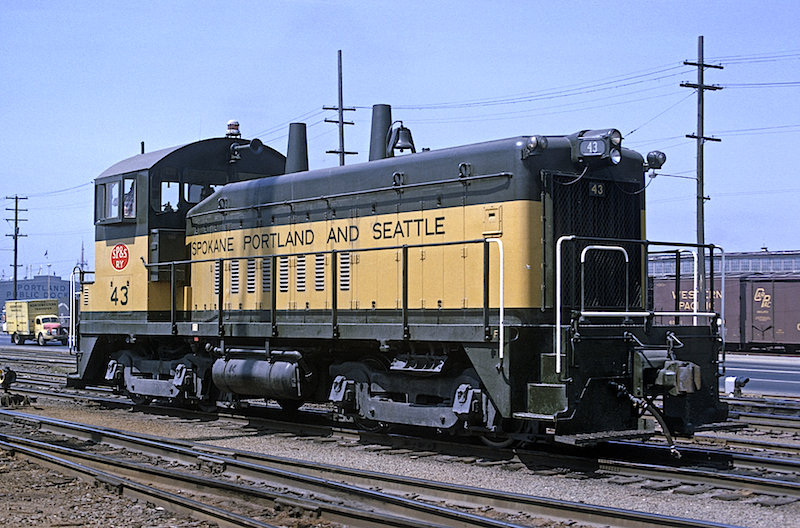
|
Reference sources:
This article would not have been possible without the help of the following contributors:
New: 1 August 2026 by R. Craig |
| |||||||