Ford's Rouge Manufacturing Complex Locos |
|
|---|---|
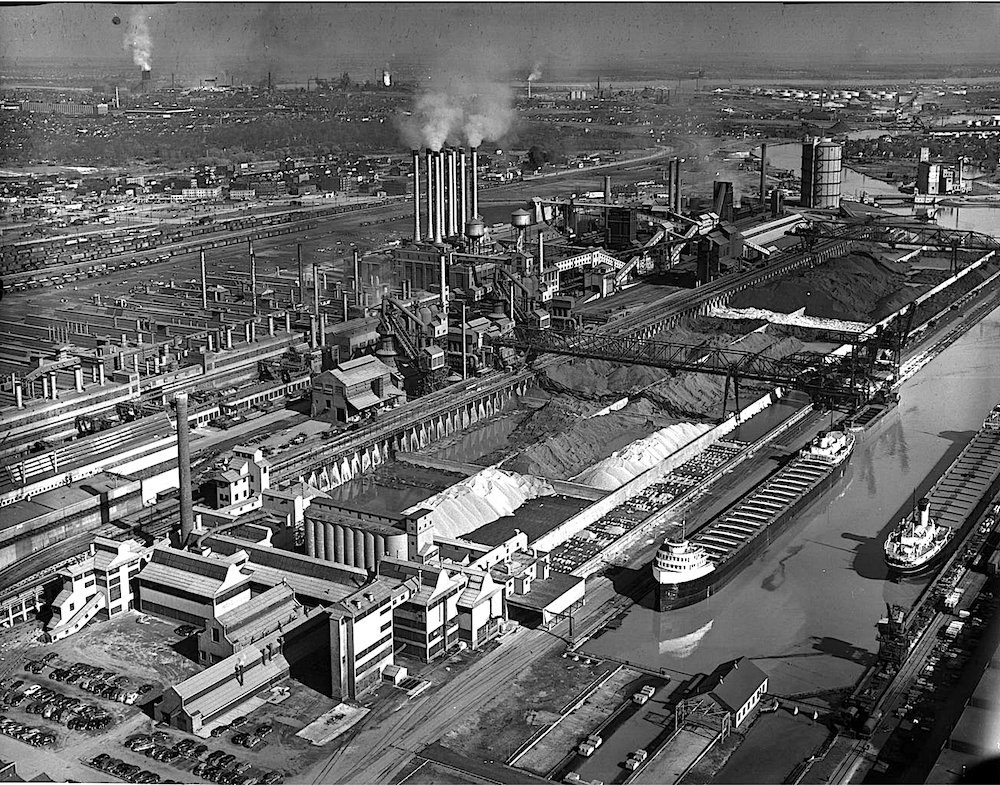 The Rouge Manufacturing Complex encompassed nearly 2000 acres -- (Aerial photographer unknown) blank |
|
For decades, Ford Motor Company's mammouth Rouge Manufacturing Complex in Dearborn, Michigan
operated what some considered the largest privately owned industrial railroad in the United
States, and perhaps all of North America. The project had been a ten-year, phased-construction
program that saw the facility completed in 1928.
The vision of industrialist and auto magnate Henry Ford, the first phase of the project was completed in 1918, which was slated to build patrol boats for the U.S. Navy during World War I. When the war ended, production at the Rouge plant transitioned to tractors. It wasn't long afterwards that automobile and truck manufacturing took center stage and remained until the start of the 21st Century when the market for trucks exploded. At one point, the Rouge site consisted of 93 separate buildings. At its peak, the Rouge operation encompassed 100 miles of track and a locomotive shop which was comprised of more than 450 skilled craftsman, builders and and general labor personnel. The shop also serviced some of subsidiary's Detroit Toledo & Ironton locomotives. Replacement diesel power for aging steam engines began arriving in earnest during the latter part of the 1930s; even though Ford had experimented with an oil-electric locomotive as early as 1930. With the exception of four small (14/16-ton) Whitcombs, the Ford roster was the exclusive domain of locomotives that bore either a GE or Alco builder plate. It was not surprising given the friendship between Henry Ford and Thomas Edison (General Electric). By the late 1950s, the Alcos and GEs were showing their age, and Ford directed its attention to the used / rebuid locomotive market, most of which were EMDs. The automaker took another major step in 1968 with the purchase of new SW1001s from EMD. A roster of diesel power has been added at the bottom of this webpage. |
|
|
Alco Locomotives: The Rouge Plant's aging steam engines
and GEs during WWII had provided around-the-clock yeomen service, but some needed to be
replaced. The automaker turned to Alco which was more than ready to supply new switchers.
The first order was for 660-horsepower S1s which were delivered the latter part of 1946.
Subsequent orders included more 660-hp units as well as the more powerful 1000-hp models.
The car-builder ultimately owned more than a dozen of the four-axle Alcos, including S1, S2,
S3 & S4s. Btw, the roster's sole S2 was the only Alco purchased second-hand (ex-L&NE 611).
Driven by the very reliable 539 engine, a few of the Alcos worked into the early
1980s. |
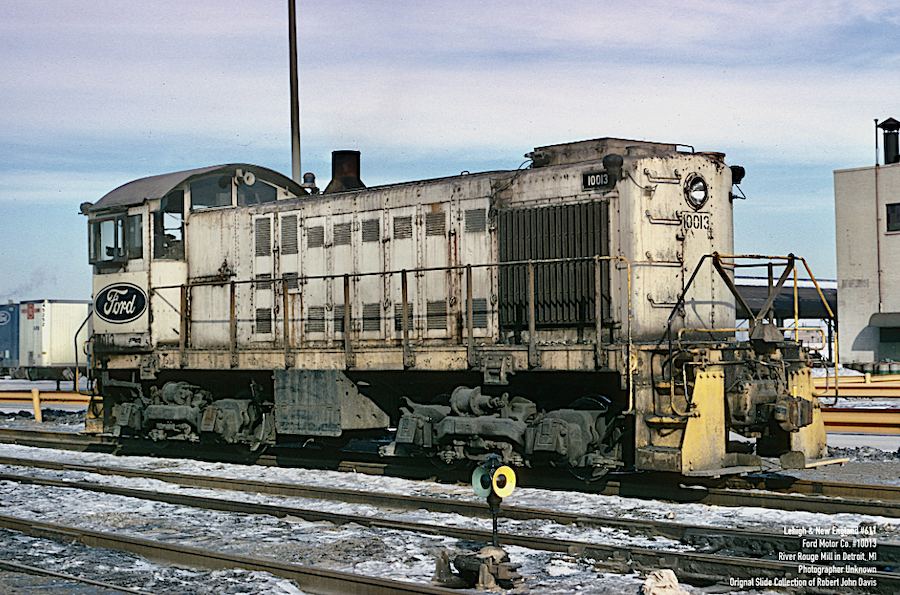
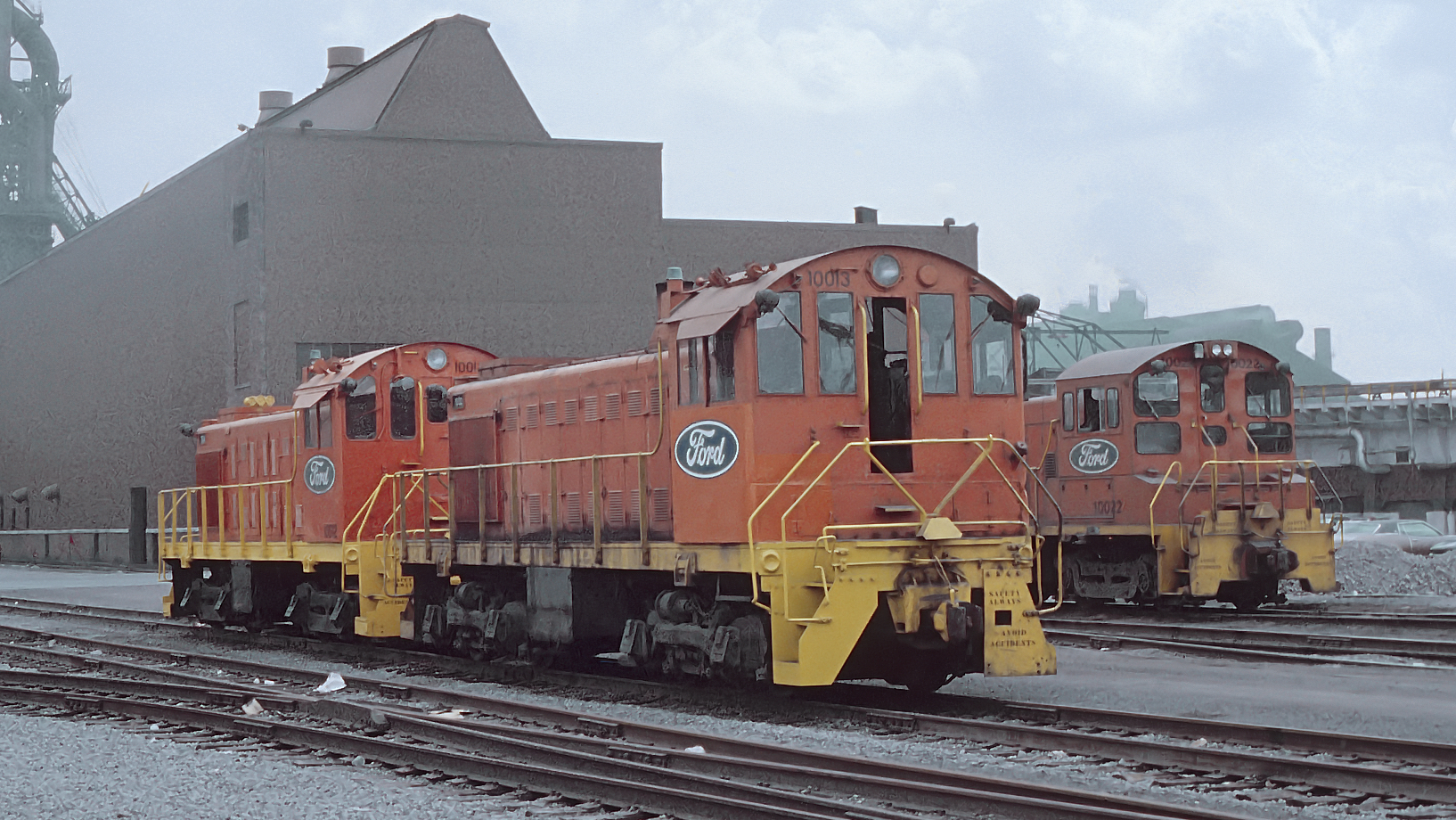
S2 #10013 is being restored as L&NE 611. (Photographer unknown / Rob Davis collection) |
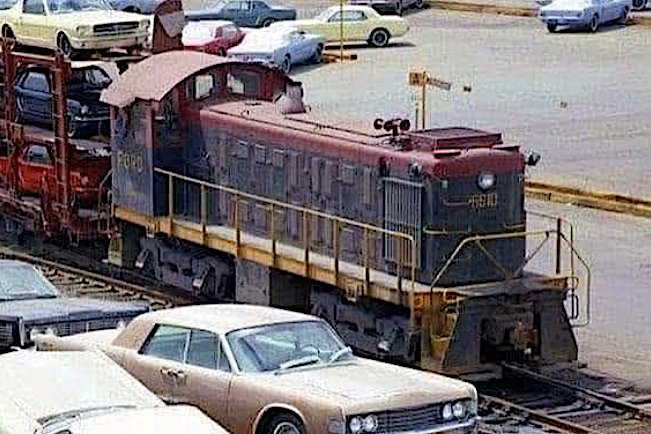
One of three S3s on the roster, #6610 in mid-1965 still wears its as-delivered colors.
(Photographer and date unknown)
|
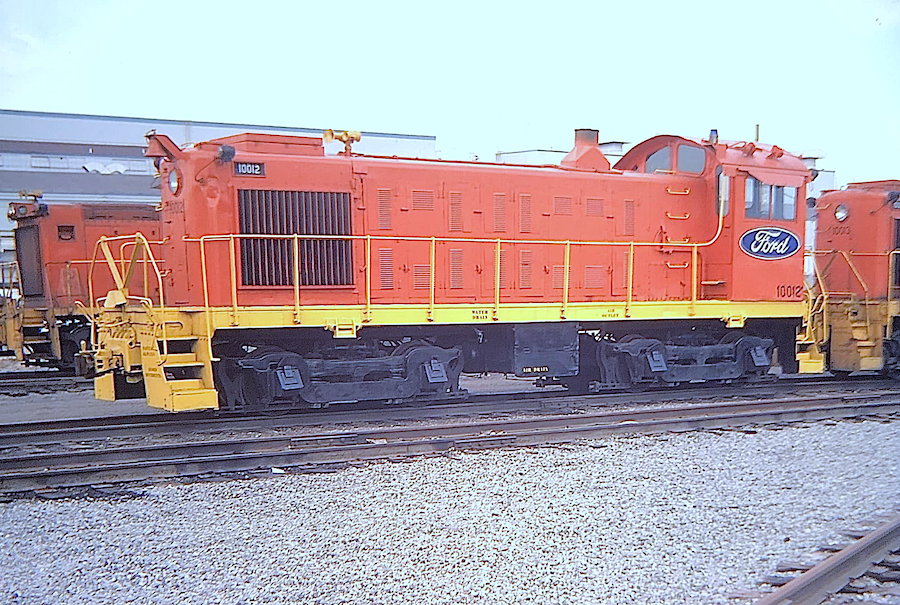
Ford's blue oval is a nice contrast to S4 #10012 solid orange attire on March 1978. (Ryan Barber photo)
|
|
EMD Locomotives: An outsider can only imagine the frustration
Ford Purchasing Agents must have felt having to buy large equipment from major competitor, General
Motors in 1968. Of course, they had little choice; Alco had announced plans to quit building
locomotives, and GE was not geared to produce 1000-hp, end-cab switchers. So Ford inked a deal
for five new SW1001s.
The 1000-hp model switcher was the last eight-cylinder model ever cataloged by EMD. A seven-inch
shorter cab was the only difference to the SW1000 which had been introduced two years earlier.
Popular among industrial and short-line users, the SW1001 out-distanced its older cousin in
terms of overall sales. |
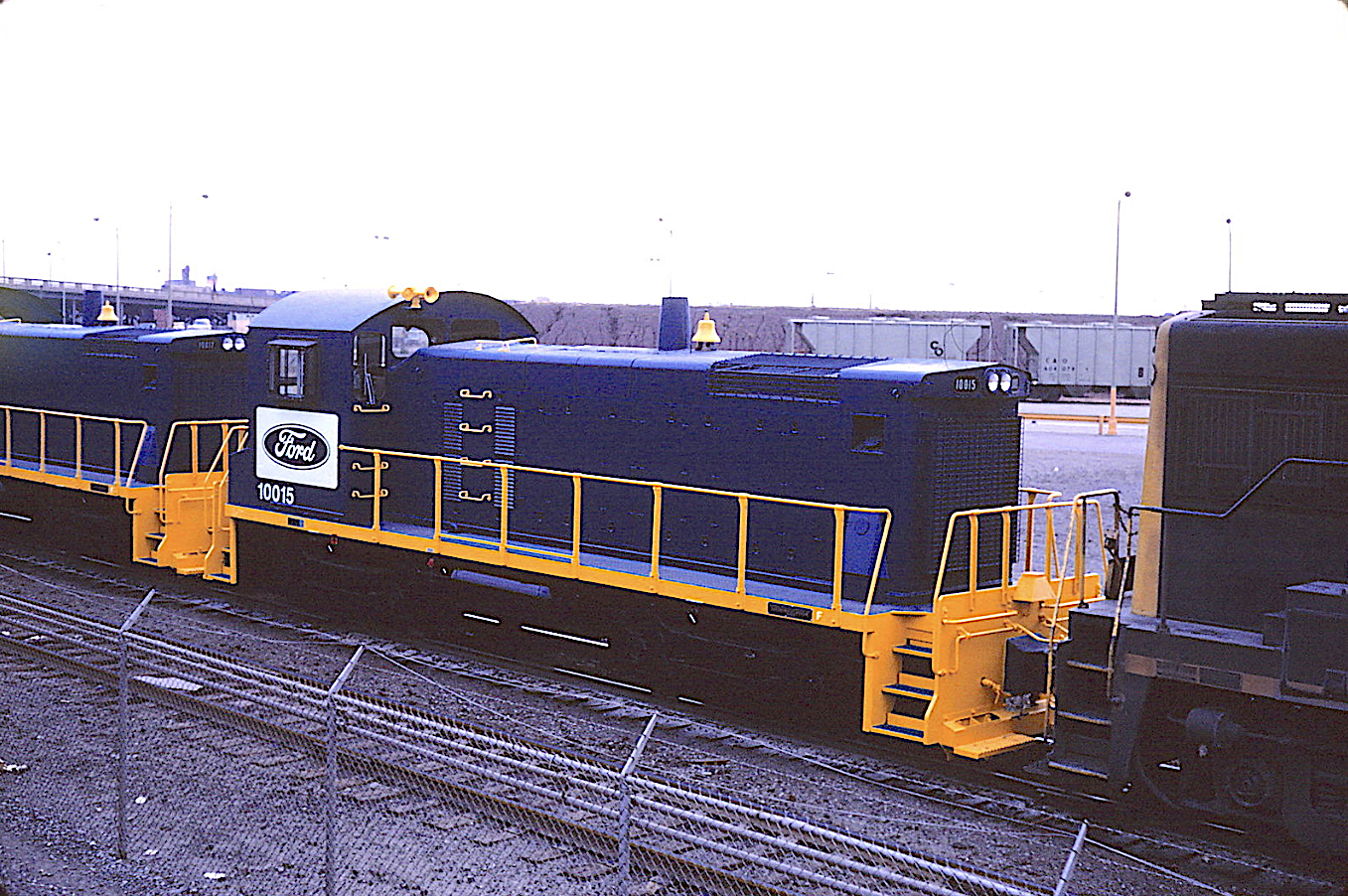
C&O U25B 2508 delivered the first three SW1001s on 3 November
1968. (R. Craig photograph) |
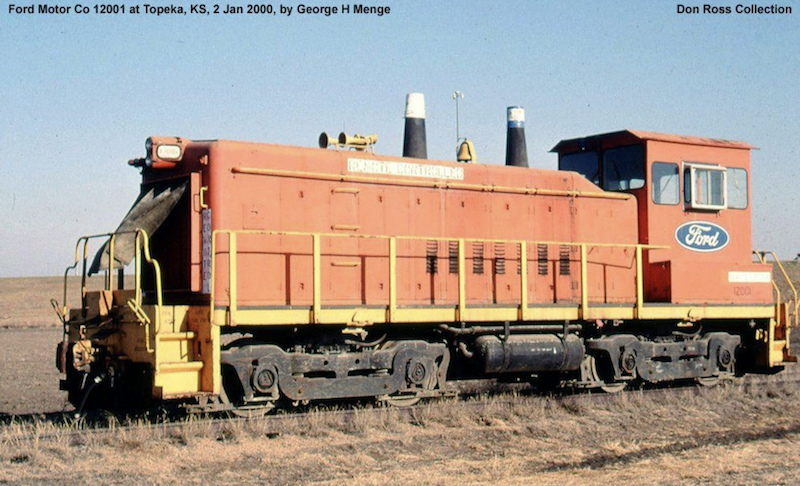
With the exception of the SW1001s, all other EMDs on the roster were second-hand rebuilds, such
as NW2m #12001. (George Menge photo) |
Ford 12002, a SW9m, glistens in the afternoon light on 1 August 1978. (Robert Tokarcik photo) |
|
General Electric Locomotives: Henry Ford and Thomas Edison
(General Electric founder) had been friends for 35 years, and their collaboration on special
projects was widely known. So when Ford was ready to replace/suuplement the fleet of steam
engines at the huge Rouge Manufacturing Complex, he turned to GE.
GEs initial response came in the form of eight double-ended 132-ton, internal combustion
locomotives which sported substantial automotive styling from the 1930s, with bright stainless
steel grilles and fancy over-sized script lettering. Several other GE models (23, 25, 50,
57, 65 80, and 125-tonners) were added as the automaker prepared to enter the 1950s. |
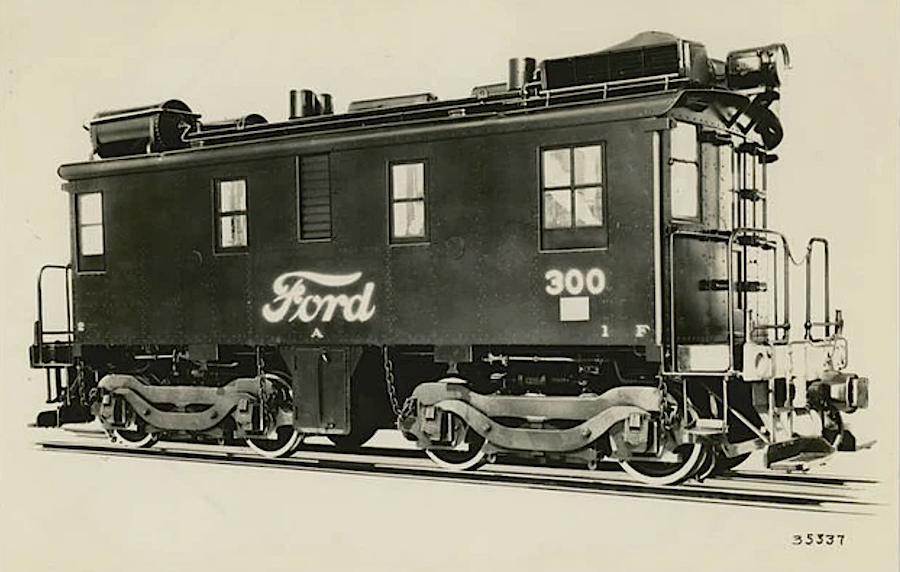
Ford disdained the looks of early diesels, such this 57-ton oil-electric, and sought something
more exciting. (Ford publicity photo) |
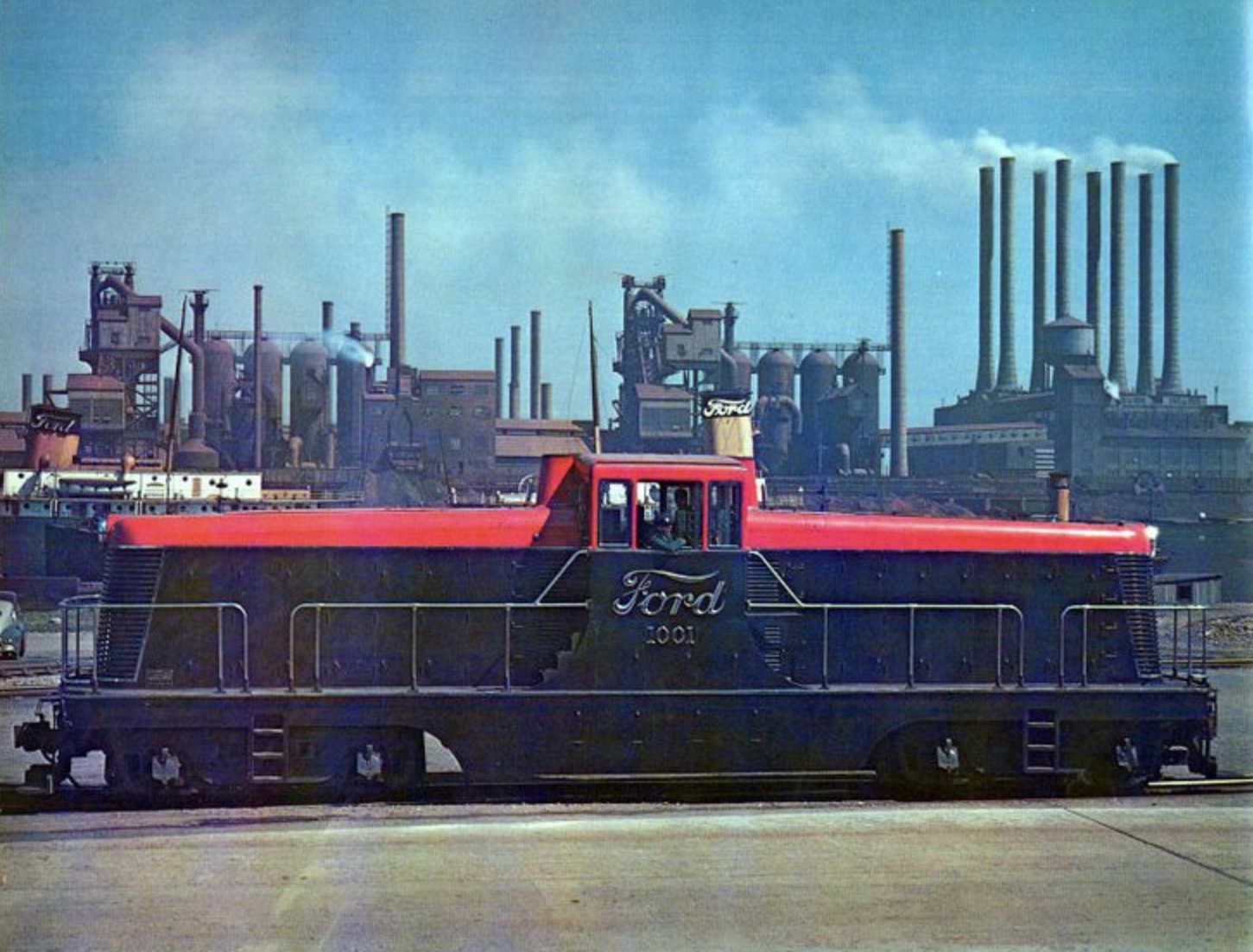
Ford's 125-ton locomotives featured the same styling touches as the larger predecessor model.
(Photo courtesy of "American Rails") |

FRDX 65-tonner 651 was built originally for the U.S. Navy as 65-00199 and supported construction
activities at Williamsburg, VA. (R. Craig image) |
|
Text by R. Craig
| |
Ford Motor Co.All-Time Diesel Roster |
| |||||||||||||||||||||||
|---|---|---|---|---|---|---|---|---|---|---|---|---|---|---|---|---|---|---|---|---|---|---|---|---|
| Revised: 9 December 2023 | Photo by: Duane Hall in September 1978 (Marty Bernard collection) | |||||||||||||||||||||||
| Reporting Mark: FRDX | Formatted by: R. Craig | |||||||||||||||||||||||
| Road No. | Model (& Bldr) | Bldr Nmbr | Bldr Date | Notes | ||||||||||||||||||||
Alco-builts Units | ||||||||||||||||||||||||
| S1 | 6601 | 74958 | 10/46 | -- | ||||||||||||||||||||
| 6602, 6603 | 74960, 74961 | 10/46 | -- | |||||||||||||||||||||
| 6604 | 74964 | 11/46 | -- | |||||||||||||||||||||
| 6605, 6606 | 77780, 77781 | 2-3/50 | #6606 sold to Geo. Silcott | |||||||||||||||||||||
| 6607, 6608 | 77786, 77787 | 2/50 | -- | |||||||||||||||||||||
| S3 | 6609-6611 | 78396-78398 | 10/50 | -- | ||||||||||||||||||||
| S4 | 10008-10011 / 1008-1011 | 81102-81105 | 12/54 | #1009 sold to Clark Landmark | ||||||||||||||||||||
| 10012 / 1012 | 81126 | 12/54 | Sold to Delaware & Ulster 1012 | |||||||||||||||||||||
| S2 | 10013 | 76174 | 9/48 | Sold to Toledo, Lake Erie & Western 611; ex-L&NE 611 | ||||||||||||||||||||
EMD-built Units | ||||||||||||||||||||||||
| 10014-10018 | SW1001 | 34262-34266 | 10/68 | #10014, 10016 & 10017 sold to Herzog as # 170, 171 & 172 | ||||||||||||||||||||
| 10019 & 10020 | SW1001 | 72695-1 & 2 | 10/73 | -- | ||||||||||||||||||||
| 10021-10023 | SW1001 | 75632-1 to 3 | 12/75 | #10021 & 10022 sold to Herzog as # 168 & 169; #1023sold to Peaker Services | ||||||||||||||||||||
| 10024-10026 | SW1001 | -- | -- | -- | ||||||||||||||||||||
| 12001 | NW2 | 1696 | 7/42 | Ex-UP 1035; sold to ADMX 12001 | ||||||||||||||||||||
| 12002 | NW2 | 7494 | 1/49 | Ex-EJ&E 431 | ||||||||||||||||||||
| 12003 | SW9 | 15511 | 10/51 | Ex-C&O 5252; sold to Farmland Ind | ||||||||||||||||||||
| 12004 | SW7 | 13532 | 12/50 | Sold to DJ Joseph; ex-SBD 2266 < L&N 2266 | ||||||||||||||||||||
| 12005 | SW9 | 14909 | 10/52 | Ex-SCL 165 < nee ACL 863 | ||||||||||||||||||||
| 12006 | SW9 | 15495 | 2/52 | Sold to Midwest steel; ex-CR/PC 8939 < nee NYC 8949 | ||||||||||||||||||||
| 12007, 12008 | SW9 | 17430, 17431 | 1/53 | Ex-Montour 81 & 82 | ||||||||||||||||||||
GE-Built Units | ||||||||||||||||||||||||
| 25-ton | 151 | 30535 | 6/49 | -- | ||||||||||||||||||||
| 152 | 30536 | 6/49 | -- | |||||||||||||||||||||
| 153 | 33424 | 4/59 | Sold to Rouge Steel 153 | |||||||||||||||||||||
| 23-ton End cab | 233 | 13149 | 7/41 | To Guy Atkinson contractor; ex-Ravenna Ordnance 233 (Hunkun-Conkey) | ||||||||||||||||||||
| 236 | 13152 | 7/41 | Sold to Consolidated Aluminum; ex-US Army 7793 < Hunkin-Conkey 236 | |||||||||||||||||||||
| 57-ton Box cab | 300 / 150 (1st) | 11201 | 3/30 | Sold to Detroit Marine Terminal | ||||||||||||||||||||
| 50-ton | 301 | 29384 | 3/47 | -- | ||||||||||||||||||||
| 302 | 29385 | 3/47 | -- | |||||||||||||||||||||
| 303 | 30792 | 3/52 | Sold to Wallace Stone 303 | |||||||||||||||||||||
| 80-ton | 500 | 28386 | 11/46 | Sold to Hyman-Michaels [D] > Allegheny-Ludlum Steel 19 | ||||||||||||||||||||
| 108-ton Box cab | 600 | 11200 | 3/30 | Sold to Construction Services 6 | ||||||||||||||||||||
| 65-ton | 651 | 27863 | 2/45 | Sold to Rouge Steel; ex-Republic Steel 2 < nee US Navy 65-00199 | ||||||||||||||||||||
| 125-ton | 1000 | 12229 | 9/37 | Sold to Wellsville Addison & Galeton #1200; scrapped | ||||||||||||||||||||
| 1001 | 12230 | 9/37 | Sold to Wellsville Addison & Galeton #1200 | |||||||||||||||||||||
| 132-ton | 1002 | 12506 | 6/39 | Sold to Wellsville Addison & Galeton #1800 | ||||||||||||||||||||
| 1003 | 12507 | 6/39 | Sold to Wellsville Addison & Galeton 1400l scrapped | |||||||||||||||||||||
| 1004 | 12508 | 6/39 | Sold to Wellsville Addison & Galeton 1600; scrapped | |||||||||||||||||||||
| 1005 | 12568 | 3/40 | #1005 sold to M.S. Kaplan 105 | |||||||||||||||||||||
| 1006 | 12569 | 3/40 | Sold to Wellsville Addison & Galeton #1700 > NY&LE 1700 > Lake Shore Railway Historical Society | |||||||||||||||||||||
| 1007 | 12570 | 3/40 | Sold to Wellsville Addison & Galeton 1500 | |||||||||||||||||||||
Whitcomb-built Units | ||||||||||||||||||||||||
| 55 | 14-Ton | -- | 11/38 | -- | ||||||||||||||||||||
| 55 | 16-Ton | -- | 11/38 | -- | ||||||||||||||||||||
| 65, 66 | 16-Ton | -- | 11, 10/39 | #65 is a 14-Ton | ||||||||||||||||||||
| 97 | 16-Ton | -- | 8/40 | -- |
Notes
Abbreviations Reference Source: Original upload: 6 October 2015 |
|||||||||||||||||||